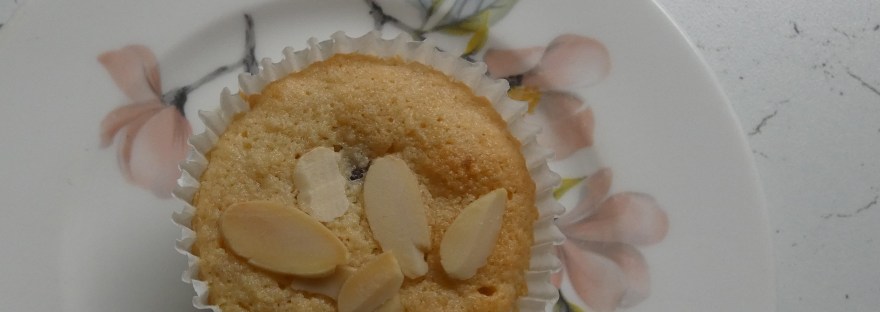
Cherry and sultana buns are one of my grandson’s favourite cakes. The buns are very more-ish. I usually make a double batch and freeze them in packs of six. The recipe is for 12 buns.
You can also substitute gluten-free flour for the flour in the base. All the other ingredients are gluten free.
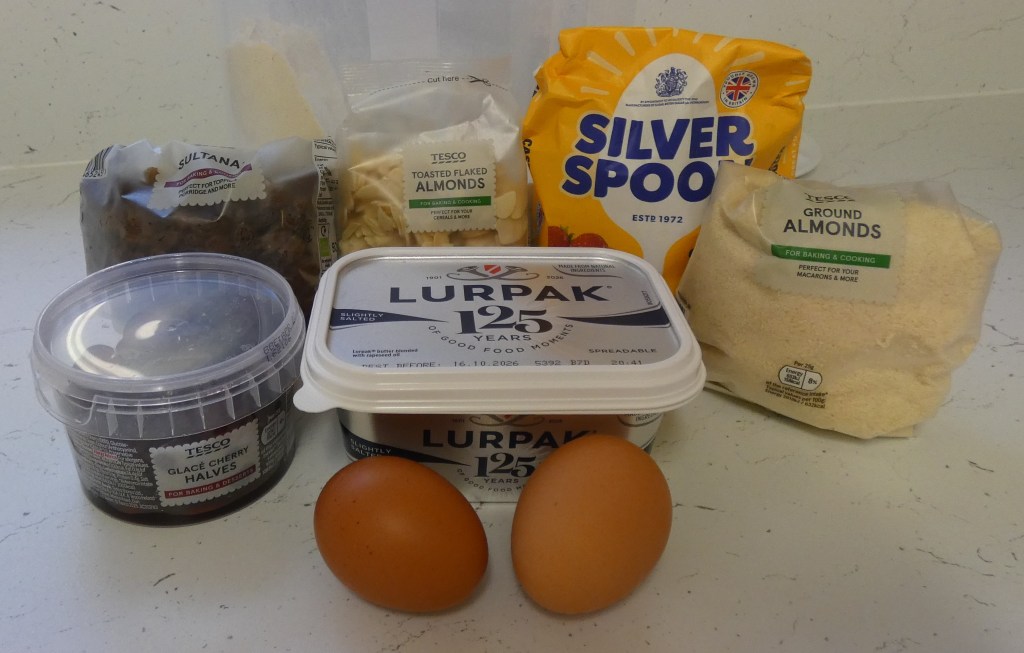
Ingredients
Base
3 oz plain flour
1 oz caster sugar
2 oz butter
Filling
1 oz sultanas: the original recipe used currants, but I prefer sultanas as they are juicier
12 glace cherries quartered
Topping
2 oz butter: I use soft butter as it is much easier to work with.
2 oz caster sugar
1 egg
3 oz ground almonds
a few flaked almonds
Method
Put paper muffin cake cases into a 12 space bun tray. Set the oven to 180 c
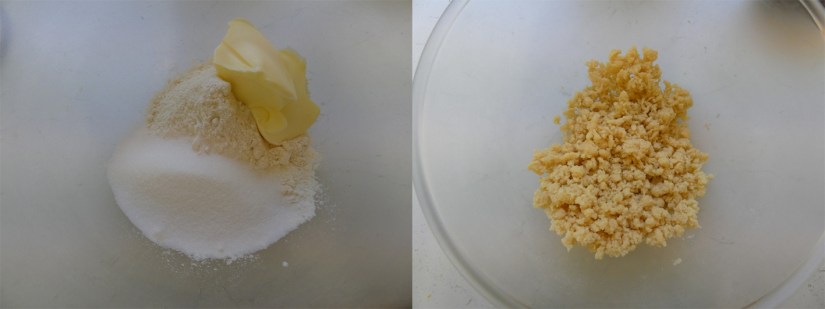
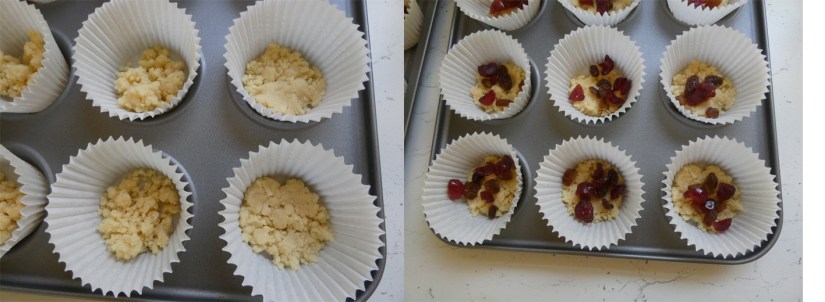
Put the flour in a bowl with the sugar and work in the butter as though you were making a crumble. When the mixture starts to stick together, sprinkle it into the cake cases and press down into an even layer.
Scatter the sultanas and cherry pieces on top.
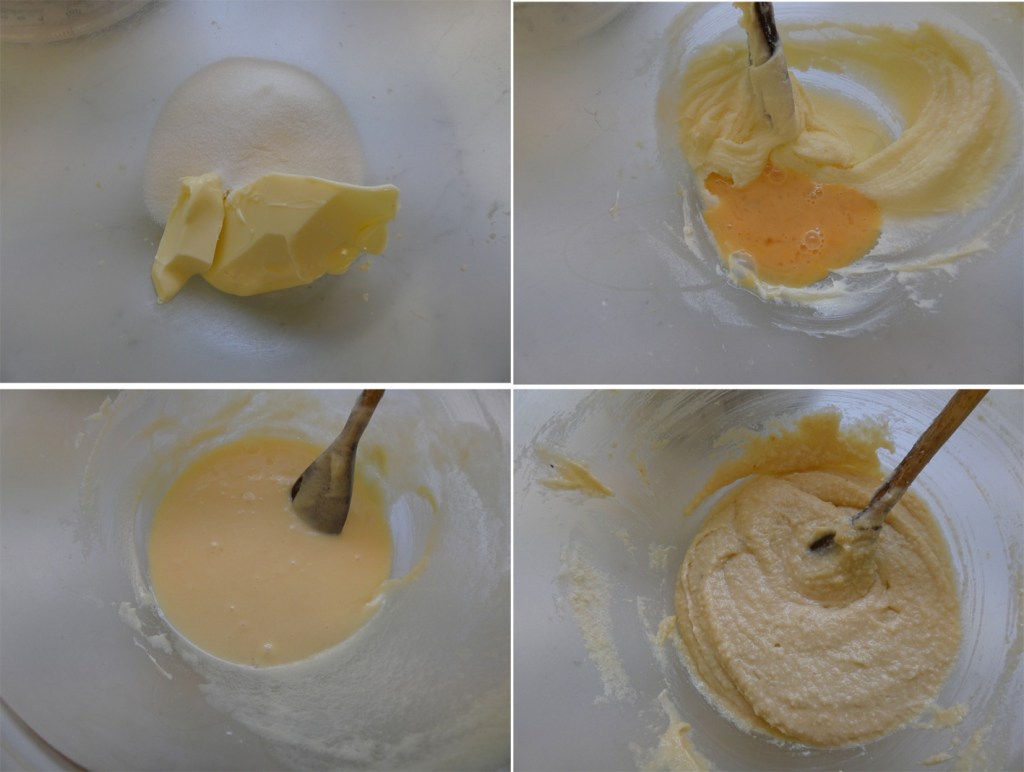
For the topping, cream the butter and sugar together until light and fluffy. Add the egg and beat well into the mixture. Stir in the ground almonds.
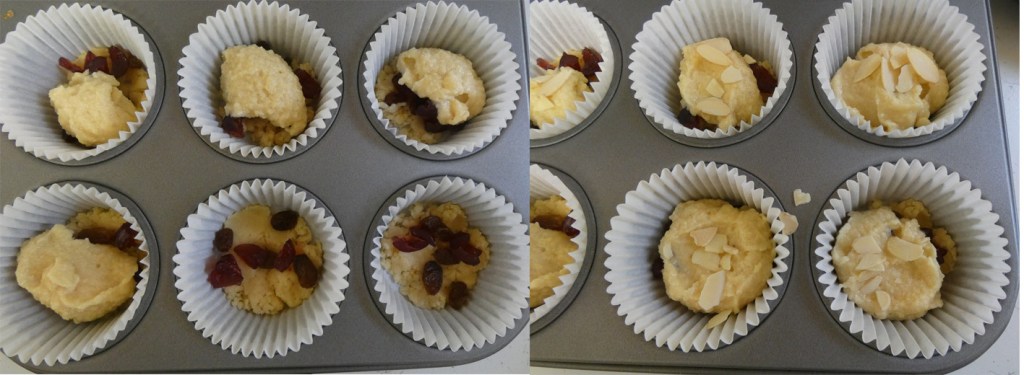
Spoon the mixture over the sultanas and cherries, making sure it covers the fruit and is smooth. I forgot to smooth it one time and there were sultanas poking out at the sides – the buns still tasted OK. Sprinkle a few flaked almonds on the top of each bun.
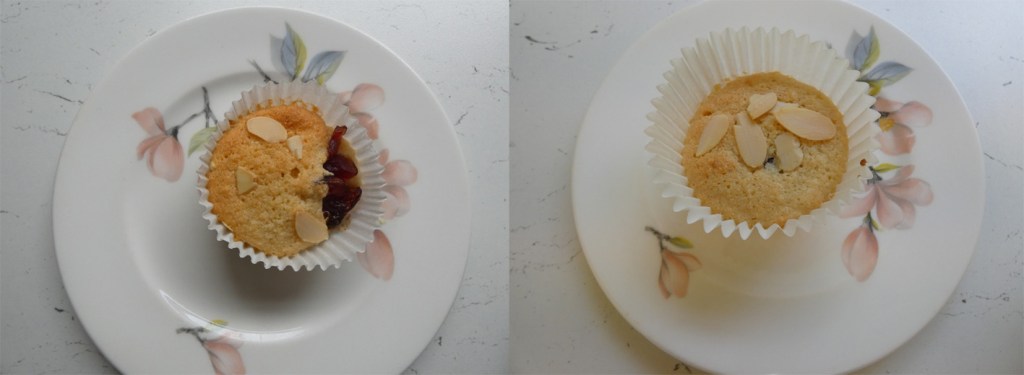
Bake the buns at 180 for 15 minutes, until just set and golden brown. Cool on a wire rack.
They will keep for a few days in an airtight tin or they can be frozen – if you have any left over.
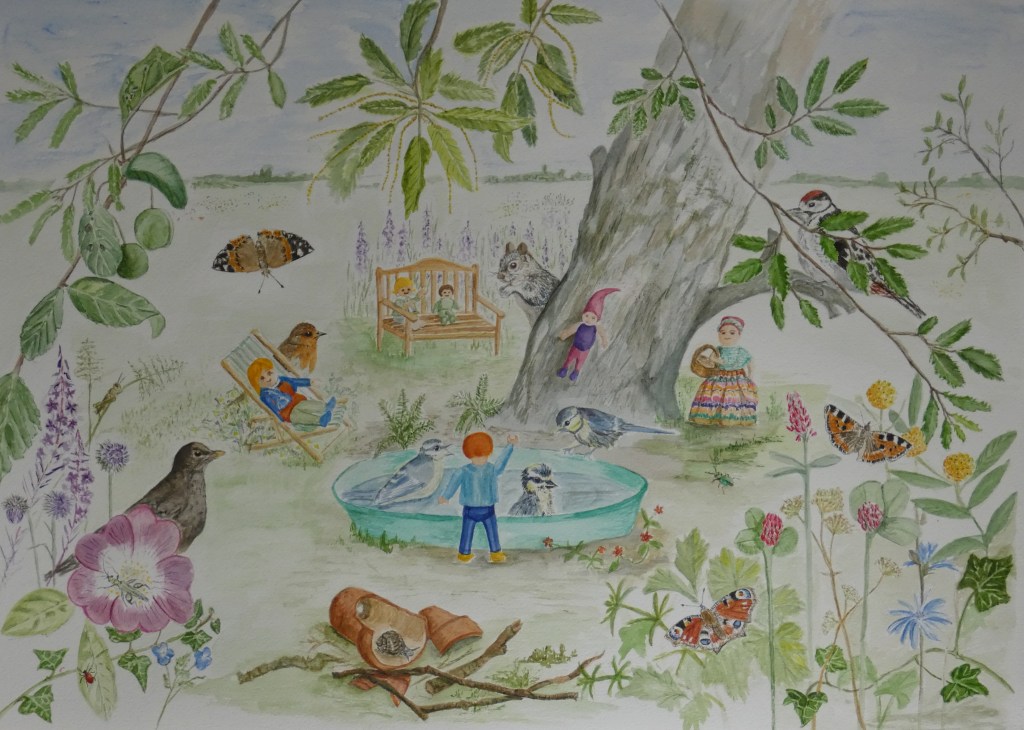
Let me tell you a story. Once upon a time on a sunny day, the Bobbin family were playing in the garden. But wait, what do you think is happening? I could tell you what I think, but it is up to you to make the painting come to life.
This is my version of the story in the painting.
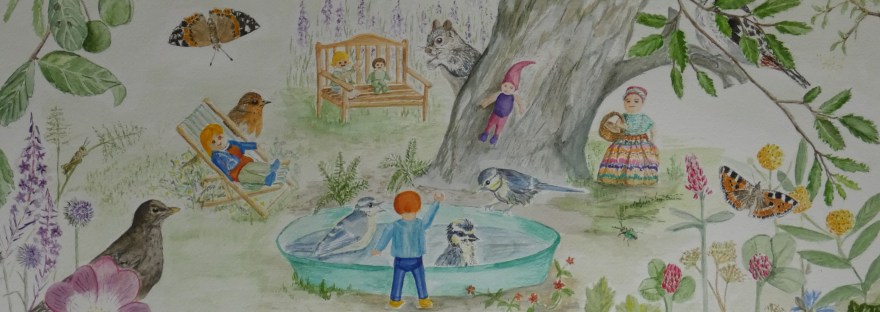
Once upon a time on a summer day, the Bobbin family were playing in the garden.
Jimmy was watching the baby bluetits playing in the water Nannie had left out for them. One young bluetit had his eye on a peacock butterfly – wondering if it was good to eat.
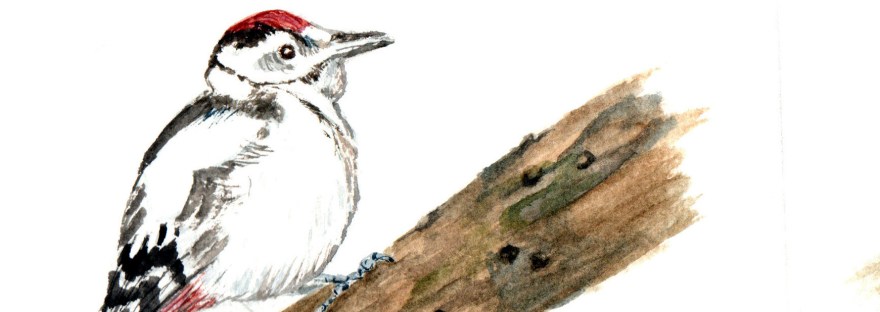
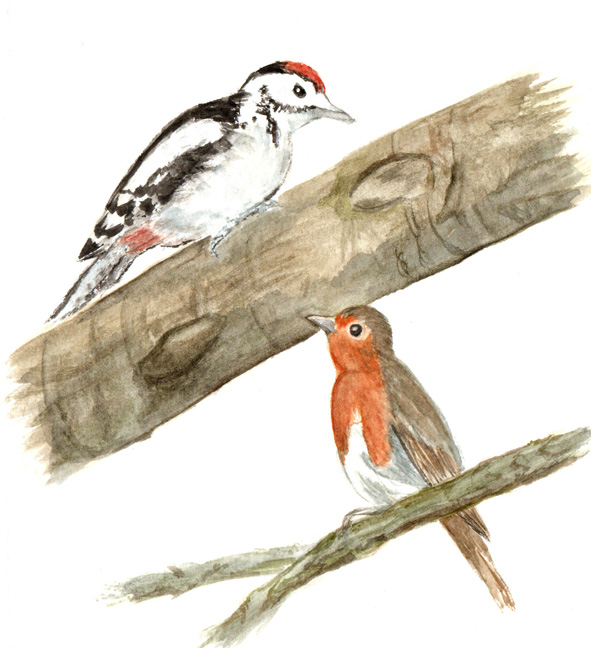
The shy great spotted woodpecker was half hidden amongst the leaves waiting for everyone to go so he could have a drink of water.
The blackbird had heard the noise and came to see what was going on. But in the meantime, was that a tasty snail in the broken flowerpot?
The squirrel was chatting to Timmy and Jerry who were sitting on the bench. They were hoping to go and have a splash in the water.
Bobbie Robin was near Clarrie, helping her keep an eye on everyone.
All was calm, but then Ned the Nisse came sliding down the tree hoping to land in the cool water. What a splash he could make! Ned was always mischievous. Jimmy enjoyed playing with him but was worried that the bluetits would be scared off by Ned.
Nannie was standing nearby. What did she have in her basket? Was it flowers she had picked or had she brought out some of her special cakes for everyone.
What is your version of the story of the painting?
Background
This is my latest painting.
Tales from Nannie’s garden lets children make up their own story, encouraging them to use their imagination, while at the same time getting to know nature.
On a shelf near the painting are various figures and items associated with the painting so that anyone can play and continue the story.
It makes you wonder what your figures get up to when you are not watching.
In April 26, after my trip along the coast of Chile I went to Rapa Nui. I was there for three nights but what an experience.
I took off from Santiago de Chile for the four and a half hour flight to Rapa Nui, in the Pacific Ocean. Rapa Nui, or Easter Island, is over 2000 miles from the coast of Chile, 1200 miles from the next inhabited land of Pitcairn, and about 2600 miles from Tahiti.
The runway at Rapa Nui is extra long – it was lengthened by the United States so that it could be used, if necessary, as a back-up landing place for the space shuttle. It was never used for that but it means that Rapa Nui can take large aircraft.
The airport itself is small, but there was a band playing and a dancer. People were handed leis (necklaces of flowers) as a welcome. We were met by our guide, a native of Rapa Nui, and taken to our hotel, the Nayara Hangaroa in the main town of Hanga Roa.
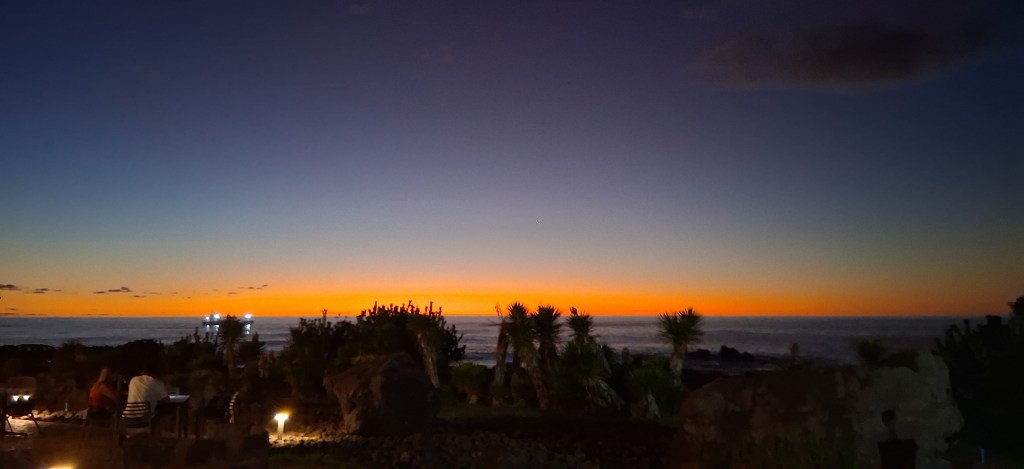
The hotel and its grounds are amazing. There are many cypress tree trunks as features. The lobby and lounge areas are designed to be an upturned canoe. My room overlooked the ocean and the sunset.
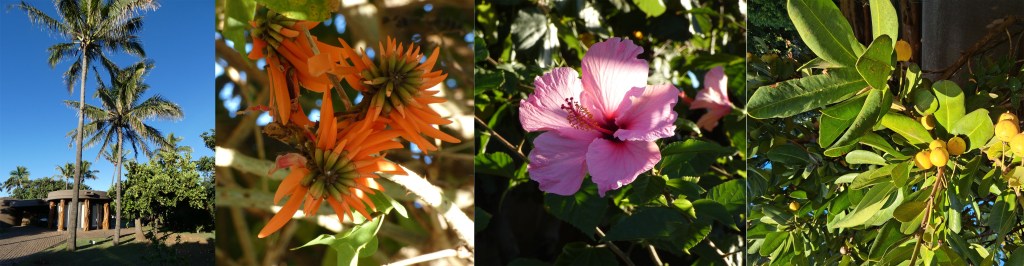
Outside were palm trees, Japanese apples and many shrubs with tropical flowers. Fresh flowers were used as decoration in the rooms. In the hotel ground chickens were wandering around. Chickens can be taken by any native if they are in need of food. The same goes for any fruits in the national park – they are there for the locals.
All around the island cattle and horses were roaming free. The horses are marked by their owners. There were usually two horses on the beach outside the hotel.
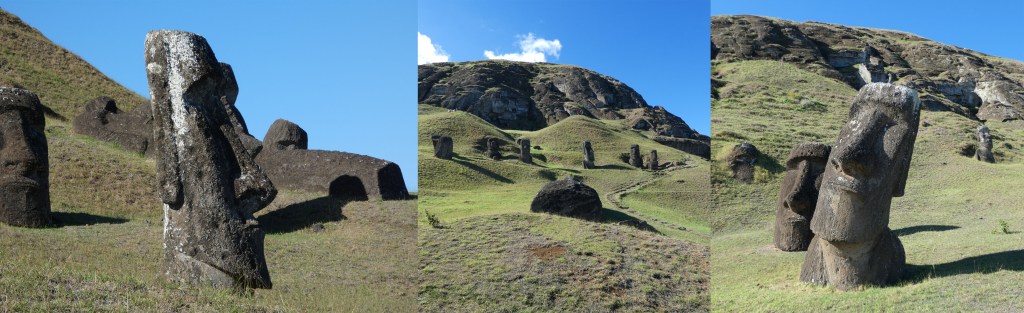
Our first excursion was to the quarry where all the moai were made. There are between three and four hundred of them in the quarry, in various stages of construction. All the moai were made here and then transported to the platforms scattered around the island. Each tribe had its own platform.
Around the island are moai that were being taken to their final spot only to be damaged during transport. They were left where they were. Only the perfect ones were used on the platforms. Most of the moai were toppled during civil wars on the island.
Most of the moai were males and standing upright. Long ears indicated chiefs or leaders or kings. One of the moai was kneeling, representing a priest talking to a king.
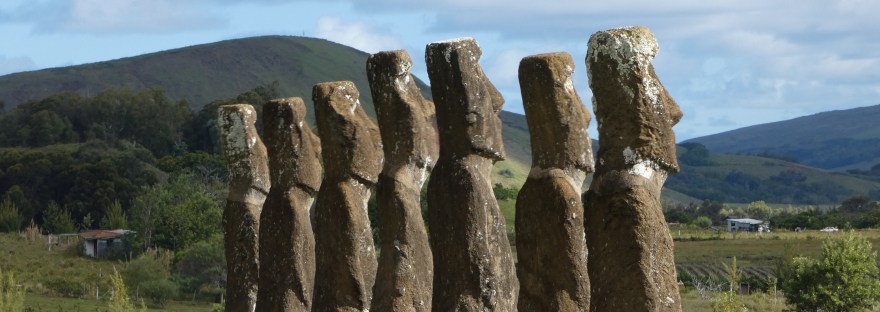
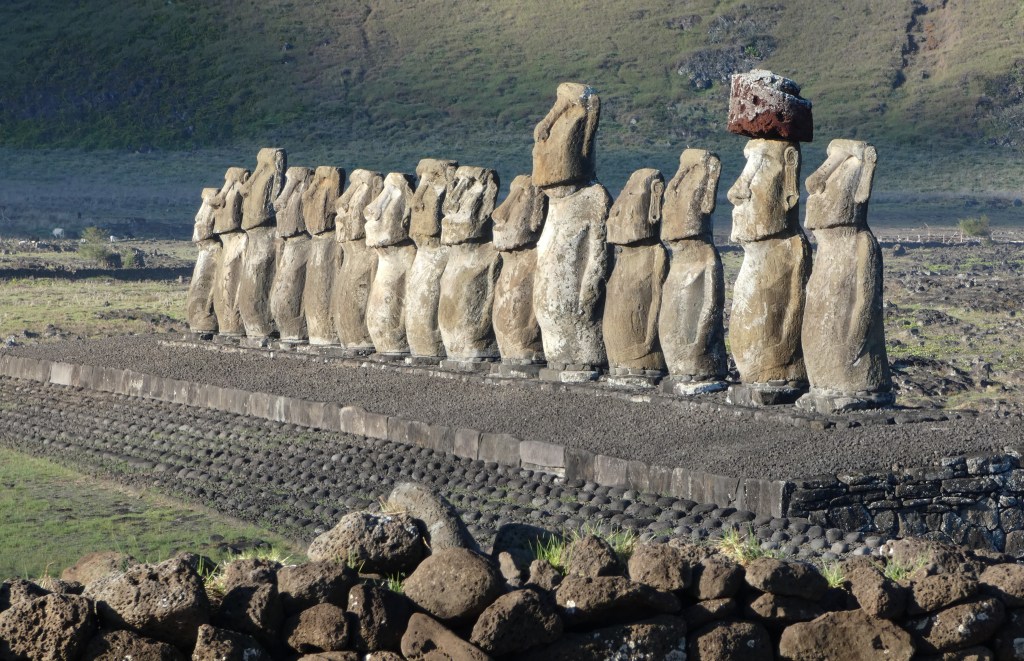
We visited Ahu Tongariki which has 15 moai standing on a platform. They were originally toppled and then moved by a tsunami in 1960. In the nineties, the Japanese helped re-stand the moai on the platform. All moai overlook the territory of the tribe.
We came here again on our last morning to watch the sunrise. There were several groups of people there waiting, but no one spoke – it was a magical moment.
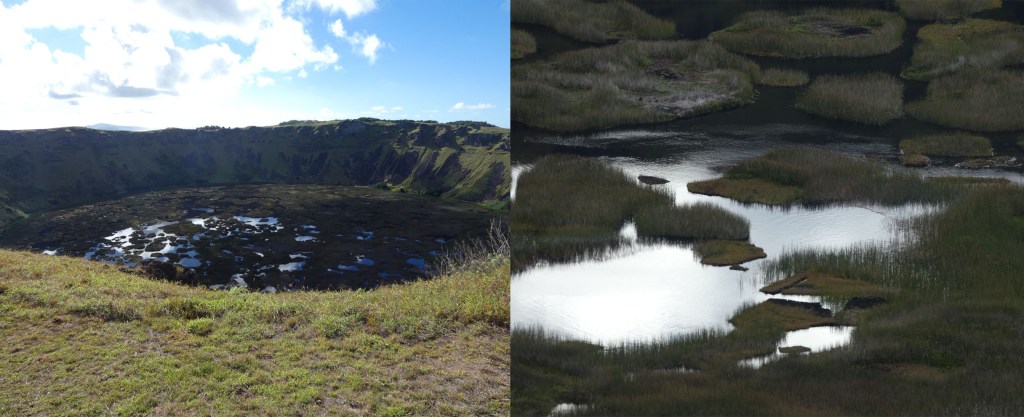
We had a tour to the volcanic crater where the island began. The crater was filled with fresh water that was covered in floating islands of plants. There was a path down to the water but we were not allowed down there. You can only go if you are invited by a local.
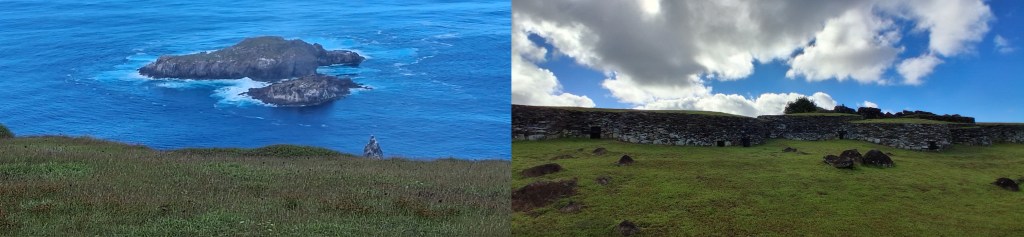
We learnt about the birdmen of Rapa Nui. Once a year each tribe would send warriors who had to climb down a cliff, swim out to the island, stay there until the eggs had been laid – maybe a day or two, then swim back with the egg. The first one back with an unbroken egg ensured that the elder of that tribe was king for a year. A lot of people died in the birdman competition.
Birdman island, the huts where the elders slept
While the people on shore were waiting for the birdmen to return, they lived in houses with dry stone walls and a tunnel to get in. They were only used for sleeping.
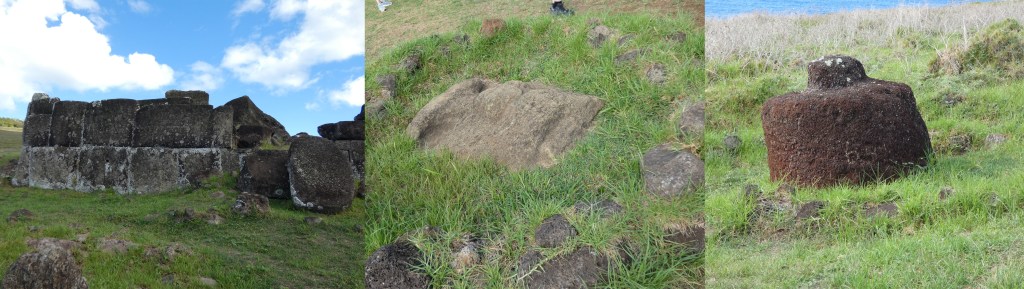
We went to a platform that was constructed in a similar manner to Machu Picchu. One of the heads of a moai was lying on its back looking at the sky. Its red hat was nearby.
Construction similar ro Macchi Pichu, moai looking to the sky, red hat
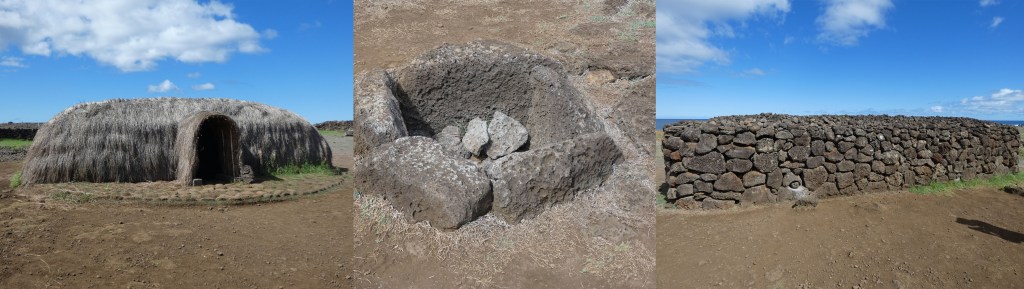
In the afternoon we went to a site where houses have been reconstructed with reed roofs. The elders would have slept in these. There was also a chicken coop made of rocks. Mostly the chicken run around, but in the times of hunger they were kept safe in the coop. This chicken coop had been reconstructed, but later on we saw some original ones.
Reconstructed hut for the elders, umu, reconstructed chicken coop
There was also an umu – a firepit. Rocks, with holes in them so they don’t explode, are heated in the pit by lighting a fire. When the rocks are glowing red you put palm leaves on them, then food, then rocks then more palm leaves. The food is left to cook for 3-5 hours or overnight. Then everyone gathers round to share the food.
At the hotel we were invited to an umu. Locals played small guitars – similar to Polynesia – and danced and sang while the food was dished up. We were given a banana leaf and on it chicken and sweet potato. Then, there was artistic dancing with storytelling.
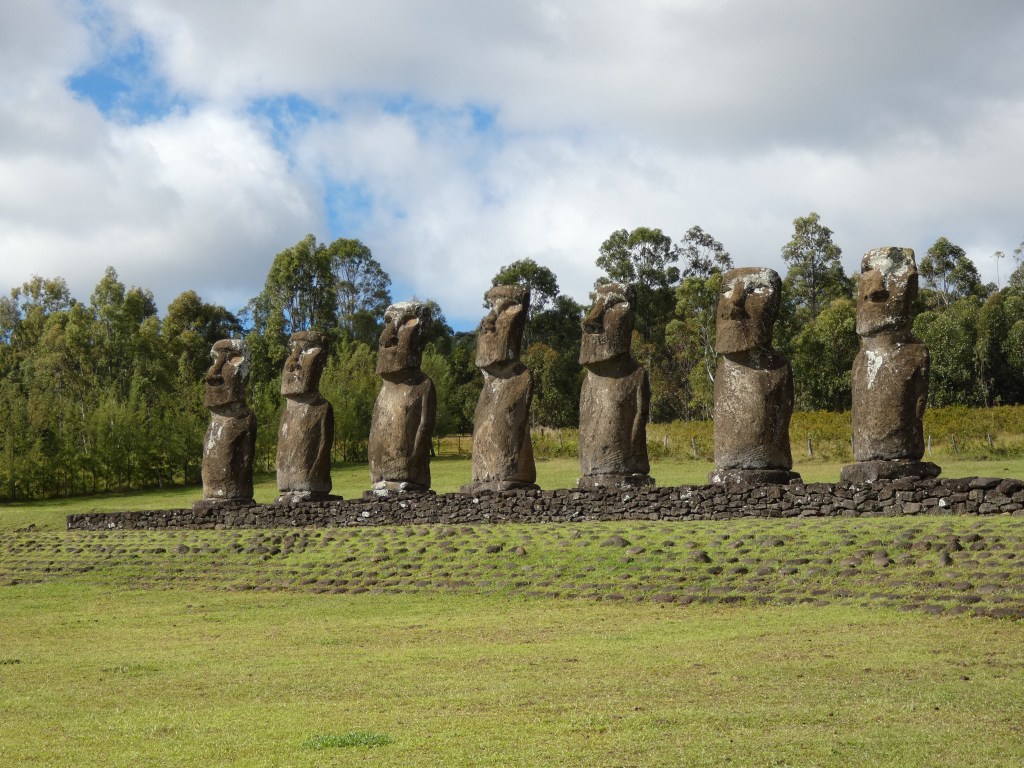
We went to the site of seven moai on a platfrom – Ahu a Kivi. The moai were looking out to sea, but their tribe were fishermen. They are said to represent the first scouts who were sent to find the island. These moai were inland as there are caves by the sea shore and the moai could fall into them. The central moai lines up with the rising sun at the equinoxes.
These moai had been restored by William Mulloy, an American archaeologist, as they had previously fallen.
The next morning we went to see some pteroglyphs of octopus, tuna, fish and Make Make – the creator god. These particular ones were made by a fishing tribe.
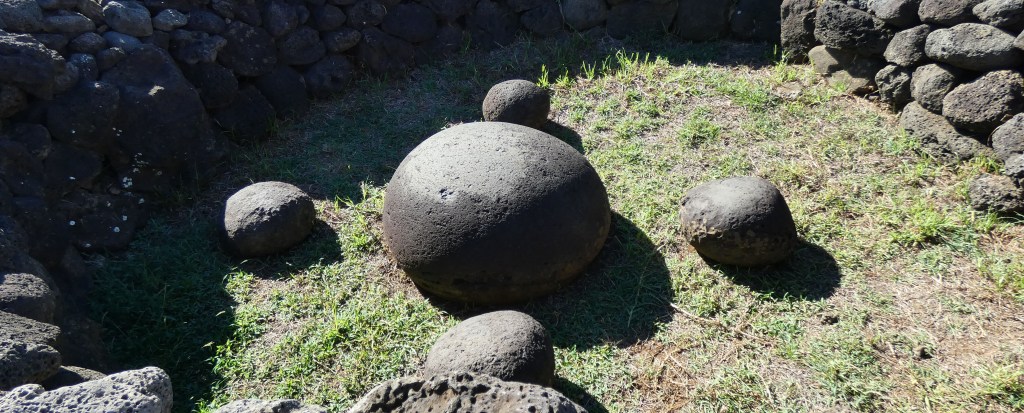
We saw several magnetic polished stones – a large one and four smaller ones round it. The largest is known as the navel of the world. It was thought to be a fertility rock and couple came to it in the hope of having children. All the rocks are now inside a rock wall to prevent people touching them.
In the rocks by the water our guide found some small shellfish which are used to make a soup. He also found an edible sea urchin which I held for a while. The tentacles were moving all the time.
Our next port of call was Anakena beach. This beach is made of fine white coral. The sea was clear and you could see fish swimming about. There were small waves – a perfect place for a swim in the South Pacific.
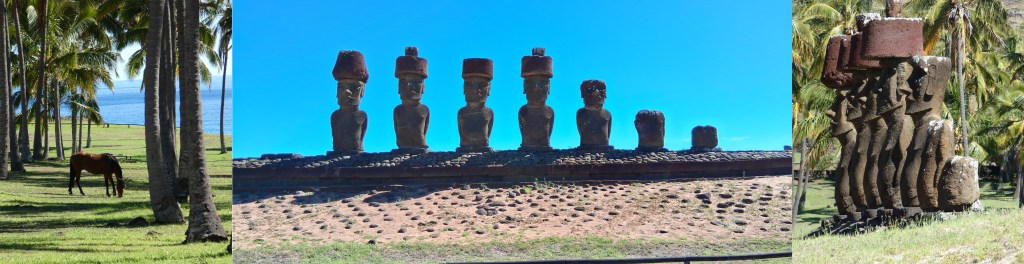
There were lots of palm trees growing beside the beach. They were a present from Tahiti. Near the beach was a platform with seven moai on it. Most had hats, signifying they were chiefs or leaders. There was also a space for another moai. This would have been a female – the sister of the king. It was found during excavations.
The hats are carved from a separate quarry to the bodies. This quarry has red rocks. We walked to the top of this quarry for a beautiful view of Hanga Roa. A lot of the houses in the countryside don’t have electricity. They are starting to use solar panels.
All standing moai have been replaced upright by various archaeologists over the years, including Thor Heyerdahl. They were all pushed over at one time because the people didn’t think they were protecting them any more.
The current Rapa Nui people are descended from 111 original islanders. Over the years they had been enslaved and taken away from the island. Rapa Nui was completely closed for three years during covid. The only contact to the rest of the world was through the regular plane deliveries. Even Rapa Nui people who were away at the time weren’t allowed to return
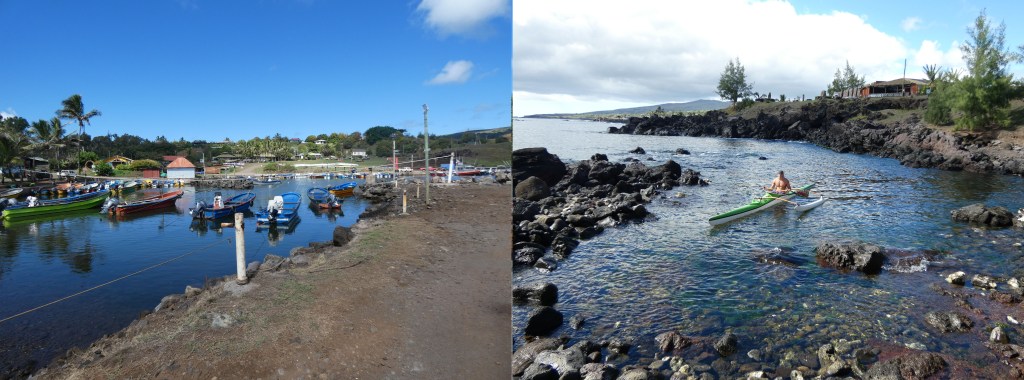
I walked into town for my last afternoon. There was a young man in his outrigger canoe arriving as I stood by a bay. He got out of the boat and put the boat on his shoulder as he came ashore.
This was an amazing trip, made all the more special by the local guide who told us all about the history of the island and his people.
In late March 2026, I joined the HX ship MS Roald Amundsen to travel up the coast of Chile.
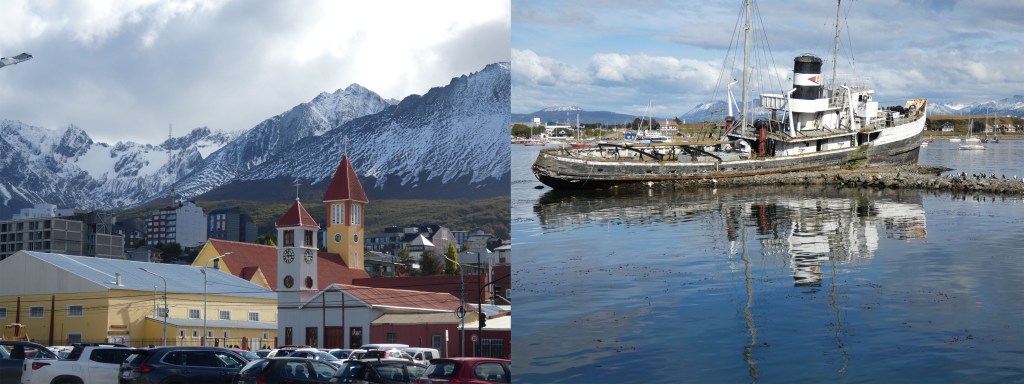
The adventure started in Buenos Aires where we spent the night before flying down to Ushuaia to board the ship. There had been the first sprinkle of snow that autumn.
Cape Horn
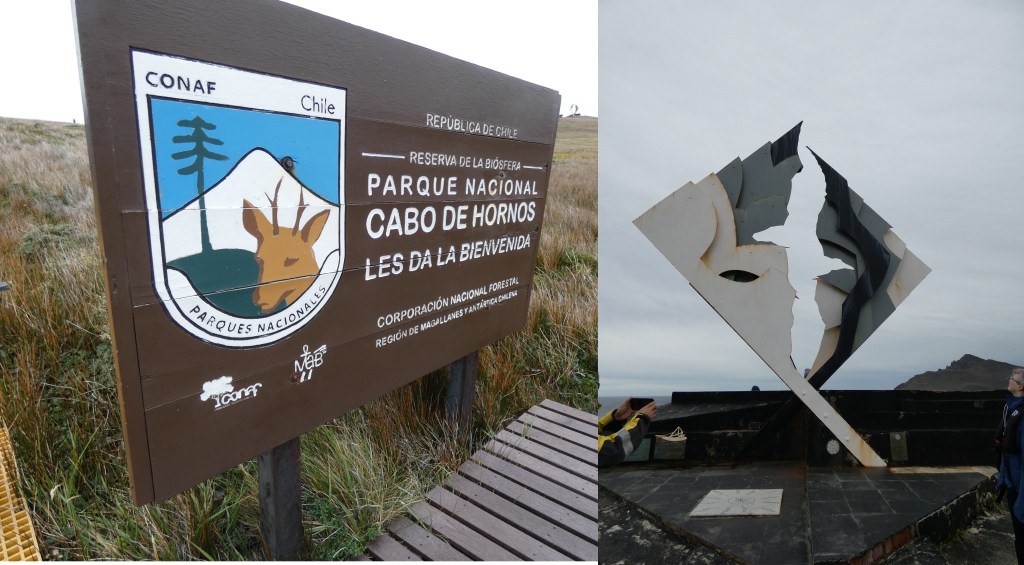
Our first adventure was to attempt a landing at notorious Cape Horn. Cape Horn marks the boundary of the Drake Passage and is where the Atlantic and Pacific oceans meet. The waters around Cape Horn can be dangerous with strong currents and winds. There was no guarantee that we would be able to land – it all depended on the weather. The expedition leader had tried three times previously to land but without success.
The sea was a bit choppy but the expedition team made it to land and decided it was safe enough for us. We climbed in the boat and went on shore. It was a bit difficult getting out the zodiac because of the waves.
On shore we climbed 157 steps to the top then across a boardwalk to the Albatross memorial dedicated to sailors who had lost their lives at Cape Horn. There was also a lighthouse to visit.
Coming back was more hazardous as the waves had picked up. One boat left the shore but had to return as water was entering. They reduced the number of passengers from 12 to 8, so that the boat would be a bit higher in the water. This worked and we were all able to get off. The expedition team were wonderful – a hardy lot standing thigh deep in the water all day ensuring our safe landings.
Puerto Williams
It was bright and sunny as we approached Puerto Williams. There were seals around the boat and turkey vultures overhead. After clearance by Chilean authorities we could go ashore. We chose to go on the long walk in the countryside surrounding the town.
There were beautiful views and we saw many birds including a thorn-tailed ryadito, crested duck, kelp goose, upland goose, caracara, cormorant and black-faced ibis.
Later in the evening we saw dolphins around the ship playing in the water. There were also magellanic penguins.
Pia glacier
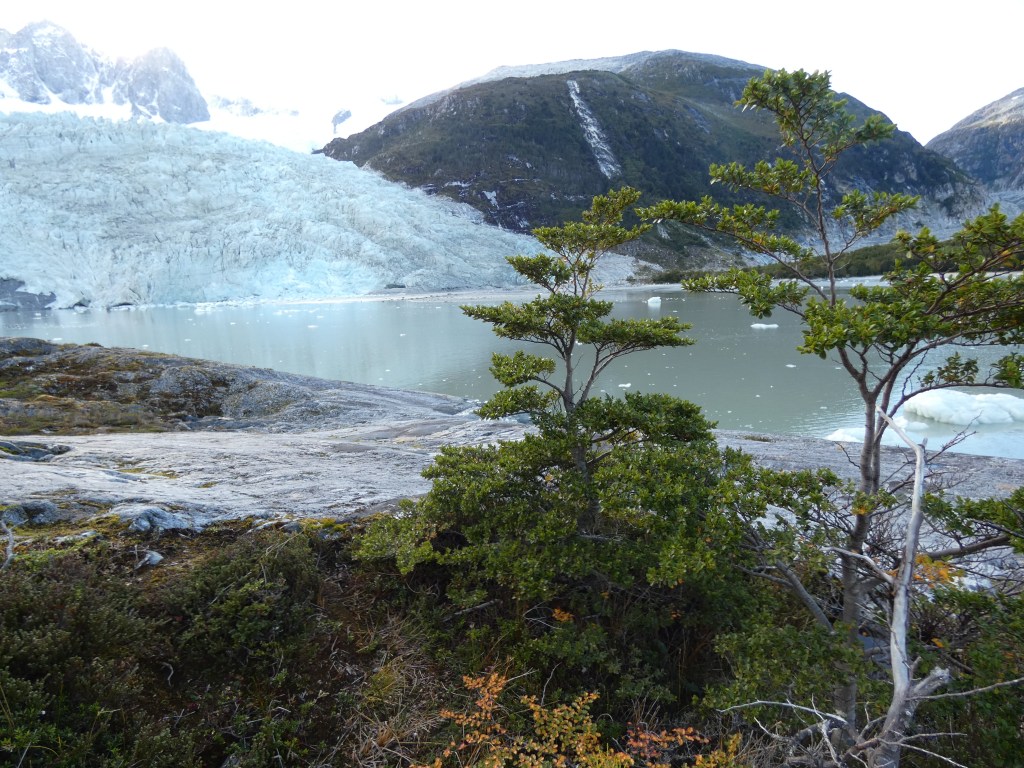
We went for a zodiac ride to the edge of the Porter glacier. The weather was perfect – sunny and still. The sides of the fjord had trees growing on the granite slopes and there were several waterfalls. While coming back a Chilean dolphin joined us jumping in and out of the water alongside. There are only about 5000 Chilean dolphins in the world and they are endemic to the Chilean coast.
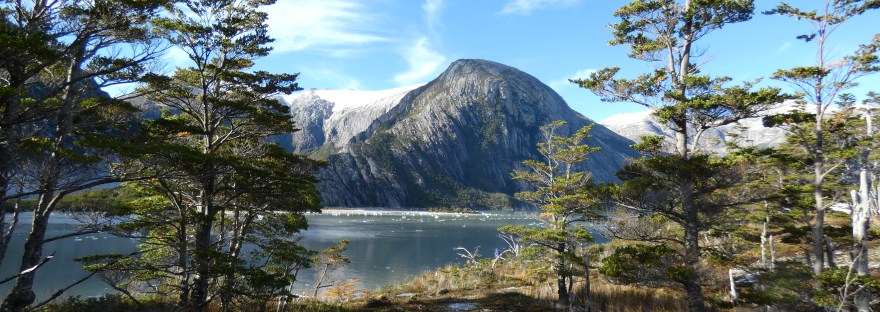
Back at the Pia glacier we went ashore to get a closer view. We could hear rumbles every now and again as pieces of the glacier fell into the water. The water itself had many pieces of ice from the glacier drifting about. On shore we walked though a small forest. There were also several bushes covered in berries. This was autumn.
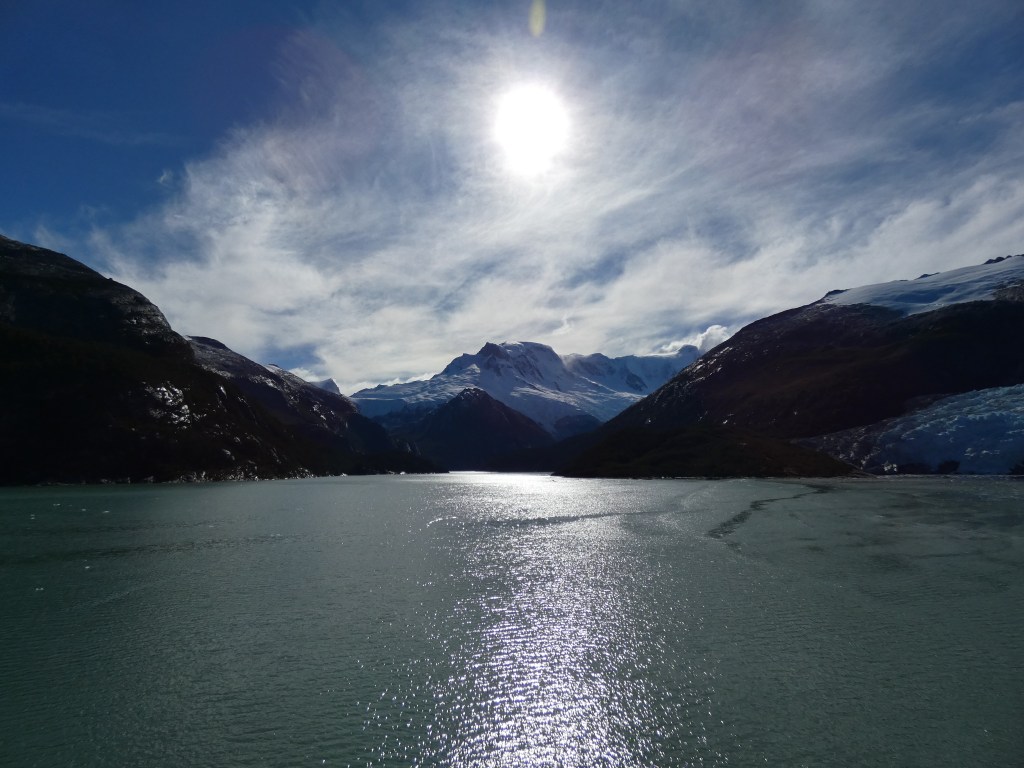
Back on our ship we watched a seal and then sailed through the fjords.
Through the fjords towards Puerto Natales
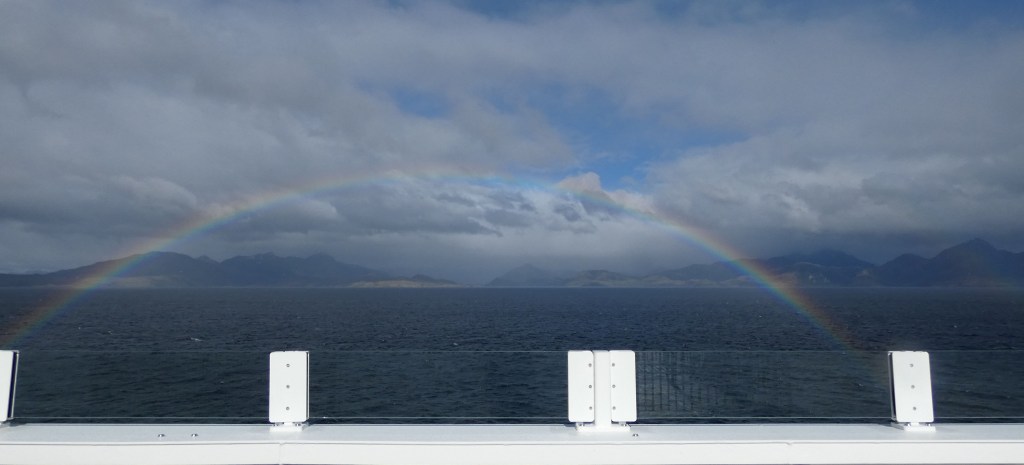
It was very breezy on deck this morning and a bit rainy and cold but there was a rainbow. In fact there were several rainbows both this morning and during the trip. We saw black-headed albatrosses, petrels, seals and whale blows.
We passed Cape Froward, the most-southerly point on the mainland. All places further south, including Cape Horn, are islands.
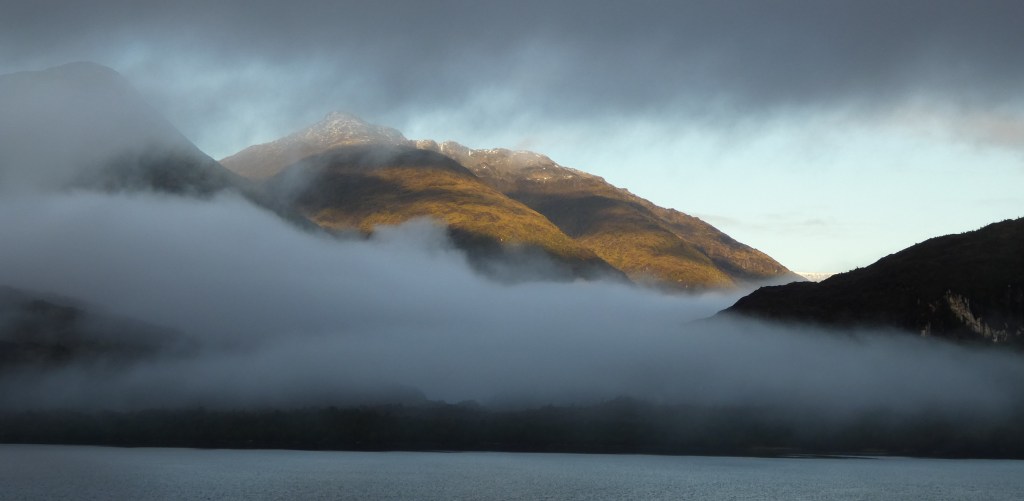
We travelled through the Magellan Strait and then later through the White Narrows- the mountains at either side were so close it felt as though we could touch them.
I saw my first Andean Condor flying above the mountain tops.
Puerto Natales
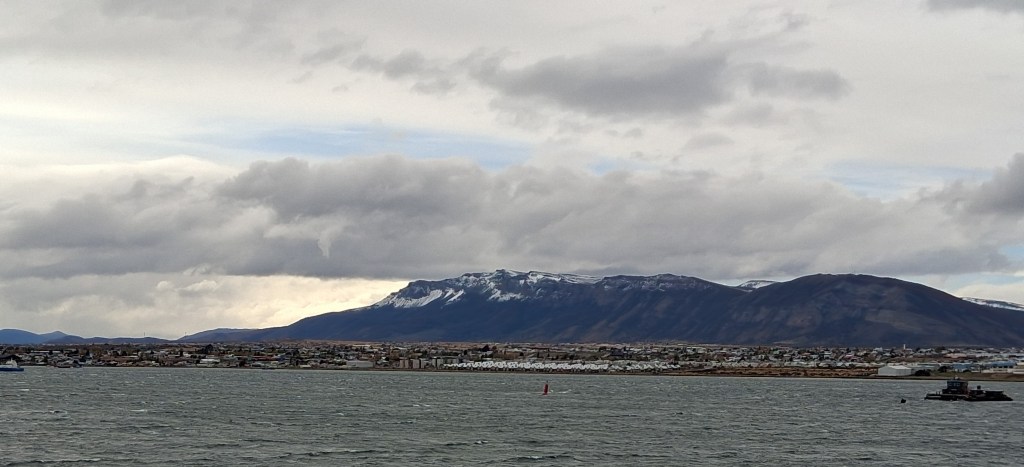
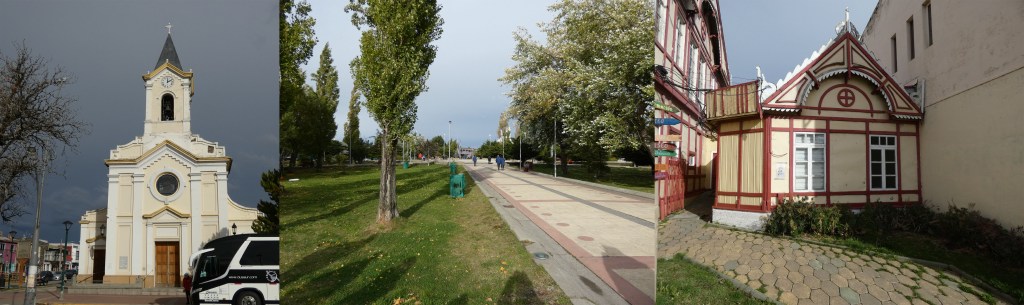
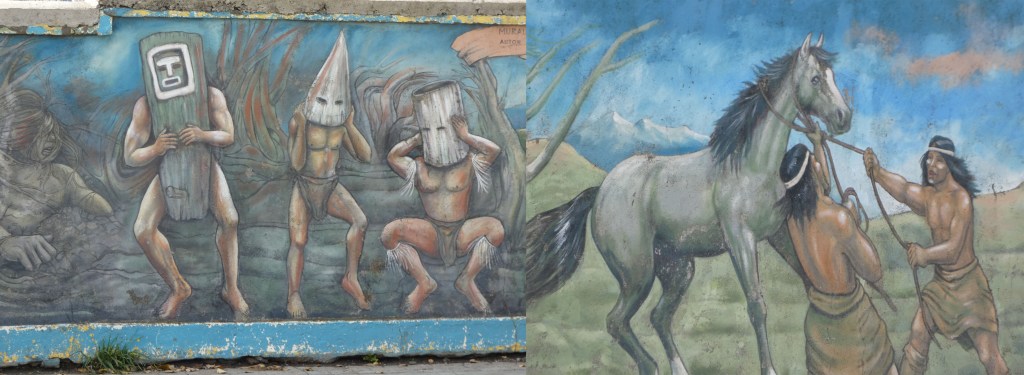
This was our first view of Puerto Natales. When we had docked we went on a bus tour round Puerto Natales. We started at the main square and saw the museum and church. There was also an impressive mural.
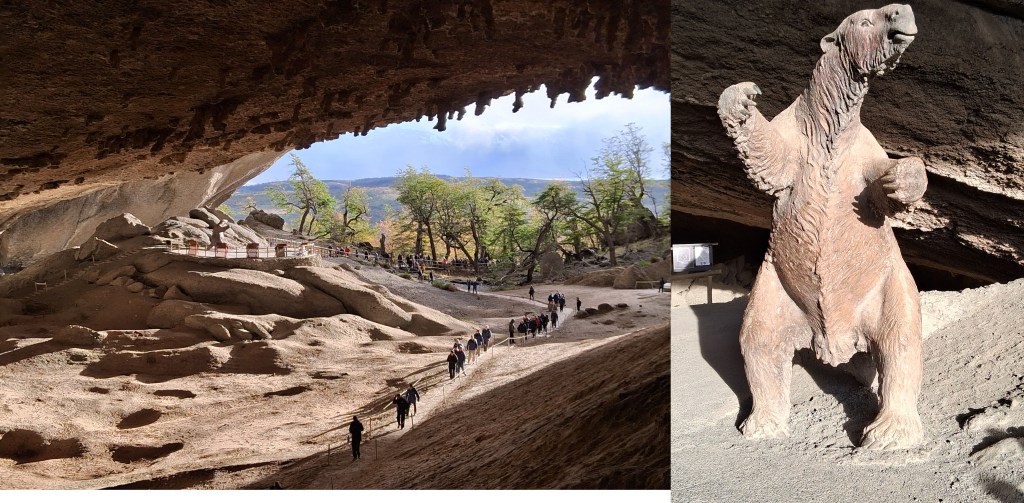
We then went onto the Milodon cave.
Here bones and skin from a prehistoric mylodon – ground sloth – were found in 1896. There is a life-sized statue of a mylodon in the cave.
The cave was huge and had amazing views. The rock looked like huge slabs of concrete.
The weather improved and it got warmer and sunny with little wind.
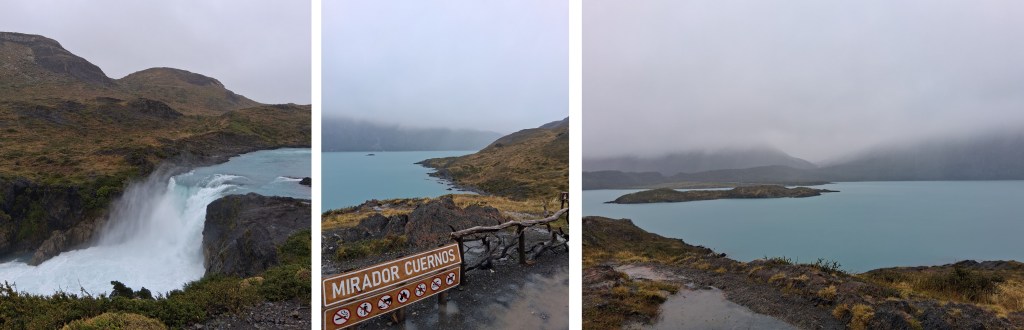
The next day, the weather changed and it was misty and rainy. We went to the Torres del Paine national park. Torres del Paine was beautiful, although we couldn’t enjoy it fully because of the rain. We walked to see the waterfall – Mirador Salto Grande.
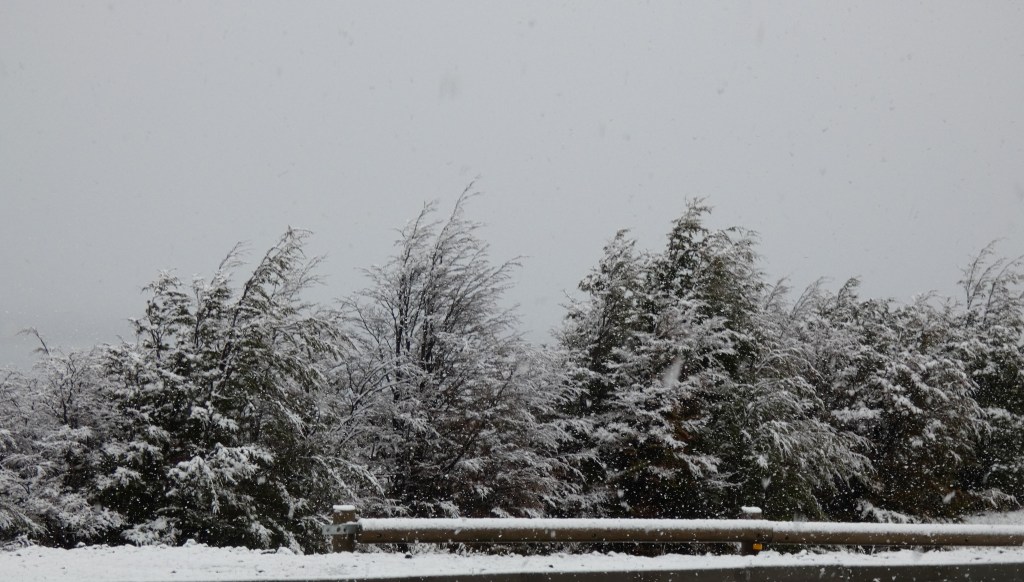
Originally there were 39 people who had planned to do the long walk to the Mirador Cuernos, but because of the rain only seven of us did it in the end. The path was well laid out but there were so many puddles that had to be negotiated. We didn’t see the mountains at the viewpoint because of the low clouds. Some people who came after us saw them and also some guanacos. And then it snowed.
It had still been an enjoyable walking through Torres del Paine.
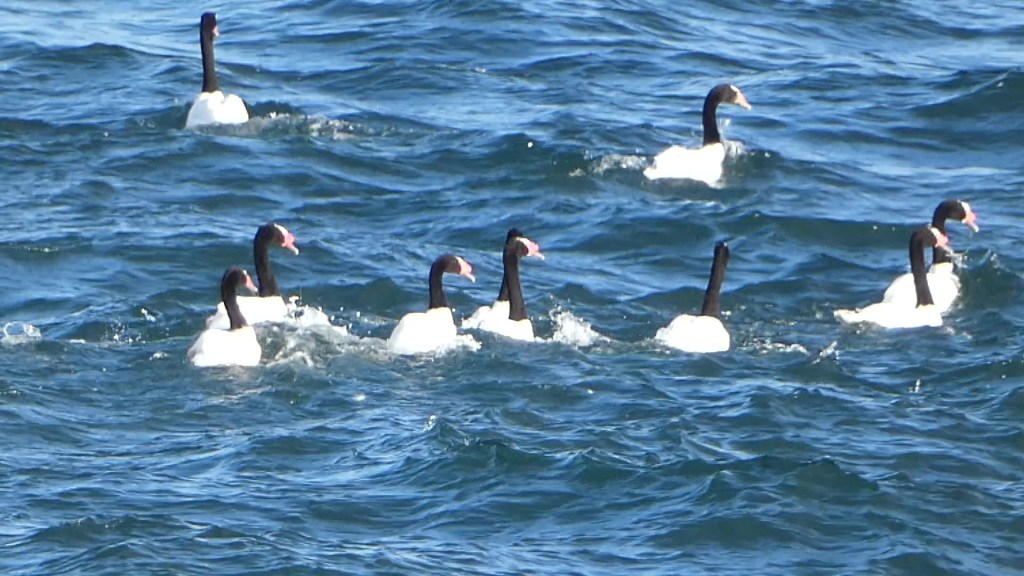
We left Puerto Natales. There were many, many black necked-swans and later on a few flamingos.
We passed through the White Narrows again. On our way to Puerto Eden we saw Chilean dolphins, several condors, storm petrels and whales. The weather was sun, rain and many rainbows.
Puerto Eden
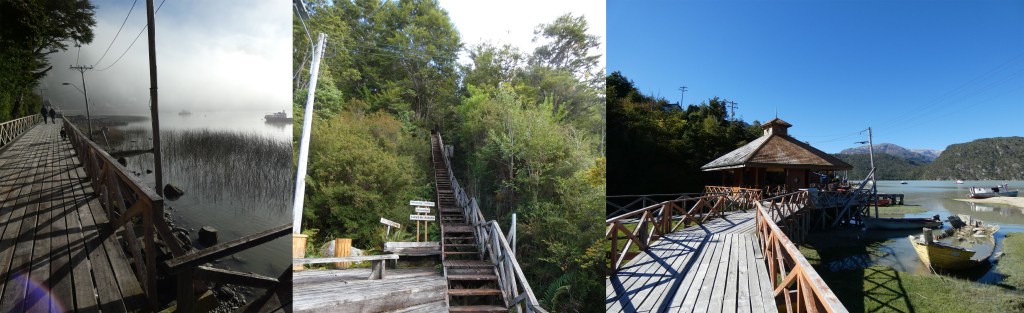
There was quite a bit of low lying cloud and mist as we approached Puerto Eden. Later it was sunny and the water was calm. Puerto Eden has only 90 people living there. They have one doctor plus an assistant and a hospital. There is a school for children until they are 14. Then they had to go away to continue their education. Now they can opt to learn online. Some children leave school at 14 and join the family fishing business.
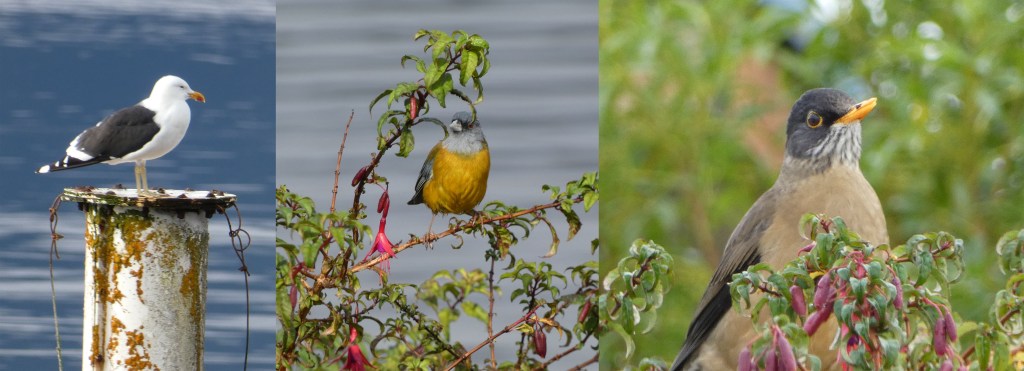
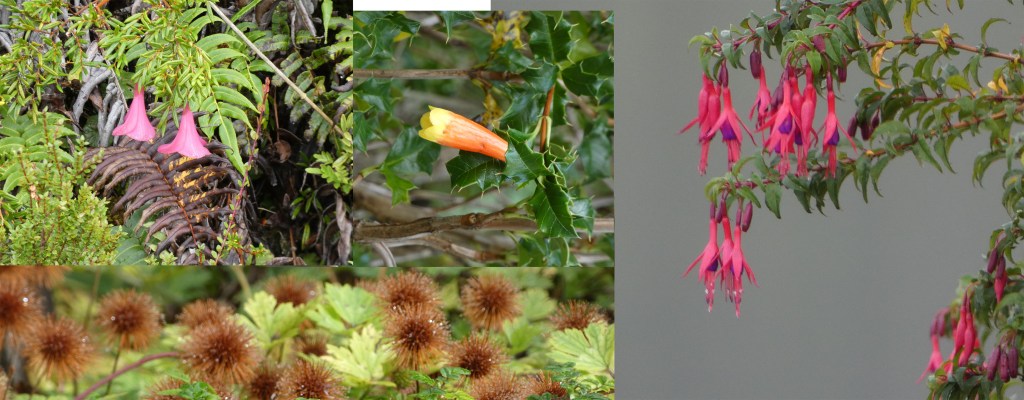
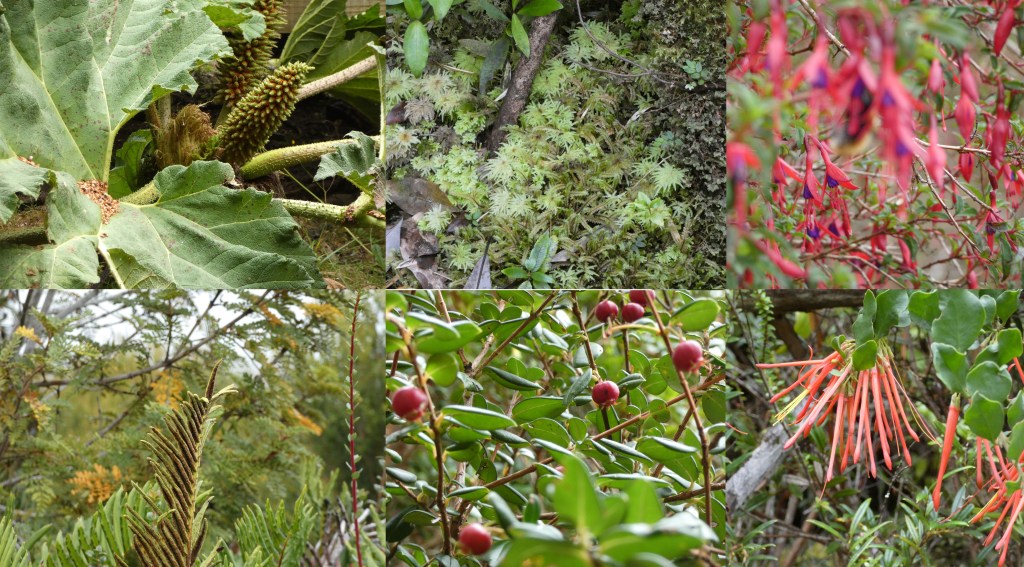
There were boardwalks around the town. Large bushes of hardy fuchsias grew wild. There were many green-backed hummingbirds in them. They wouldn’t stay still long enough for me to photograph, although I did manage to capture an austral thrush and a Patagonian Sierra Finch. There were many ferns and cycads amongst the damp undergrowth on the cliffs.
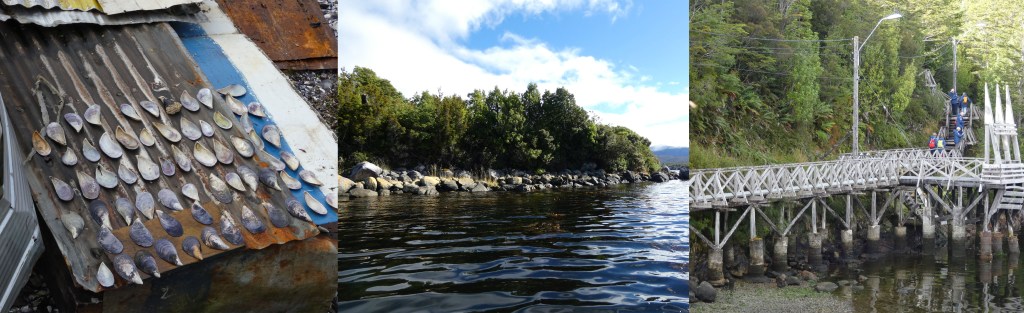
Later we went on a zodiac cruise around the islands nearby, seeing the mussels which the inhabitants of Puerto Eden fish for. Although they are unable to fish at the moment because of algae in the waters.
We set out for Caleta Tortel going through the British Narrows, having to do 90 degree turns, sounding our horn to warn that the ship was turning to port.
Caleta Tortel
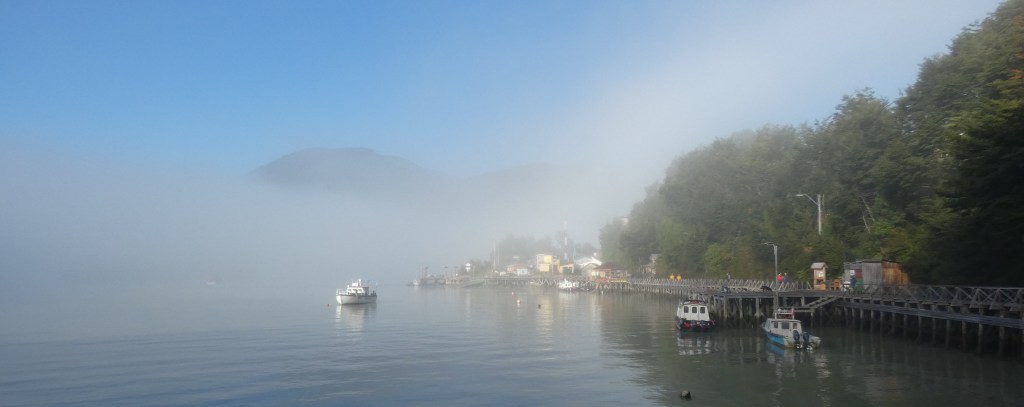
It was very foggy first thing, but the fog gradually lifted and we could see the town of Caleta Tortel.
This town has no streets, just boardwalks. We walked all around in the sunshine with local dogs guiding us. The community put on a display of music and dancing.
There were fuchsias and hummingbirds – but not as many as Puerto Eden. There didn’t seem to be much wildlife at all. We heard chirping from a bush and this turned out to be a house sparrow. They are similar to the ones in the UK but with much more grey rather than brown.
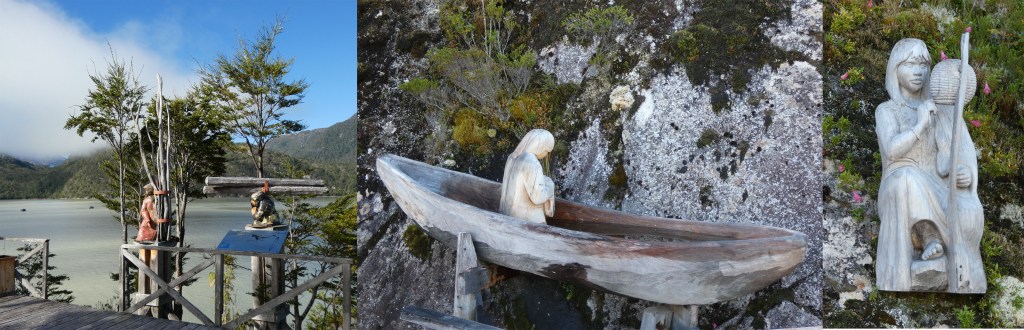
There were several wooden carvings around the town.
At sea
We spent most of the day on deck watching for wildlife and there was plenty. We saw dolphins, porpoises, shearwater, albatross. There were about twenty whales – fin, humpback and sei. Then later on we saw 4 blue whales. These are the largest creatures to ever have lived – a blue whale can weigh as much as 30 T-rex. The blue whales were so close you could hear the sound of their blow.
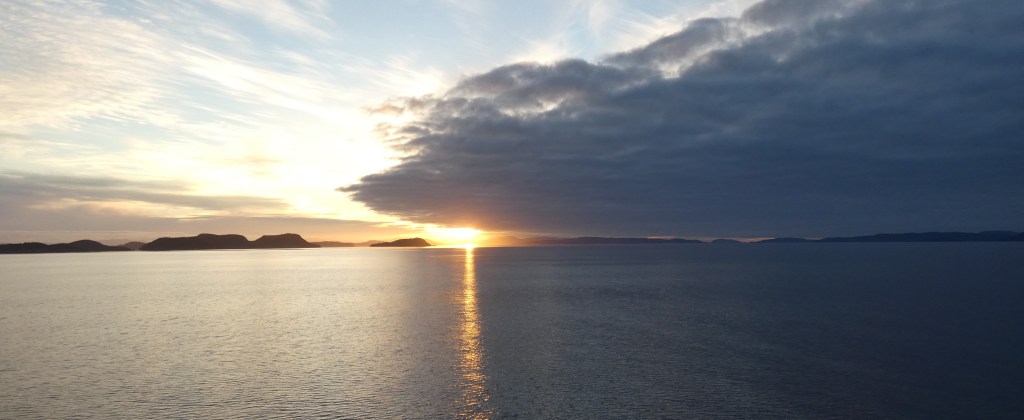
There was also an amazing sunset.
Castro
It was cloudy at first in Castro, but then it turned sunny. We saw lots of gulls, turkey vultures and lapwings.
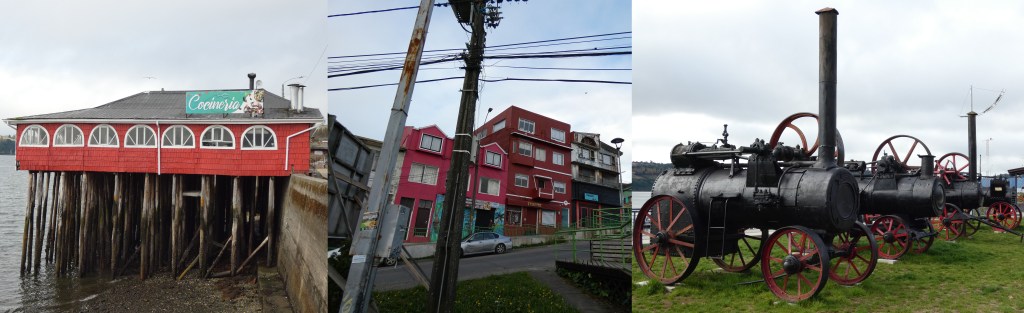
Several buildings at the water’s edge are built on stilts. The town has very steep roads from the quay to the town. We had dogs guiding us again. If any of the dogs strayed into the territory of another dog they would start barking and the new dog would take over guiding us. Their kennels were beside the street.
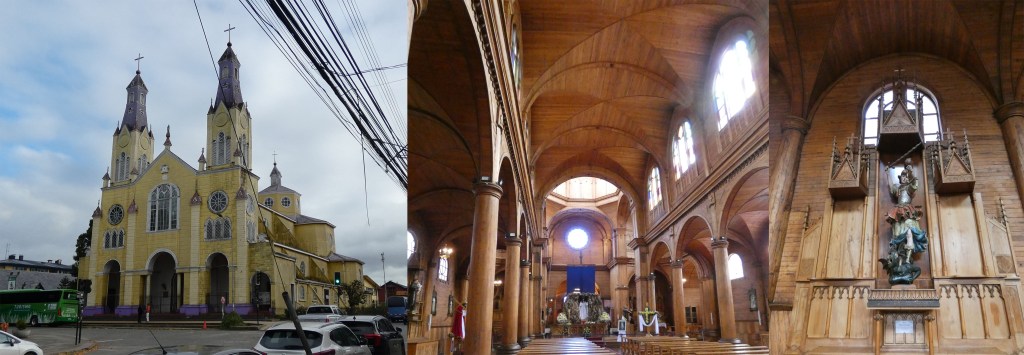
In the main part of the town was the Church of San Francisco. It is built entirely of wood but in the style of a Gothic stone church.
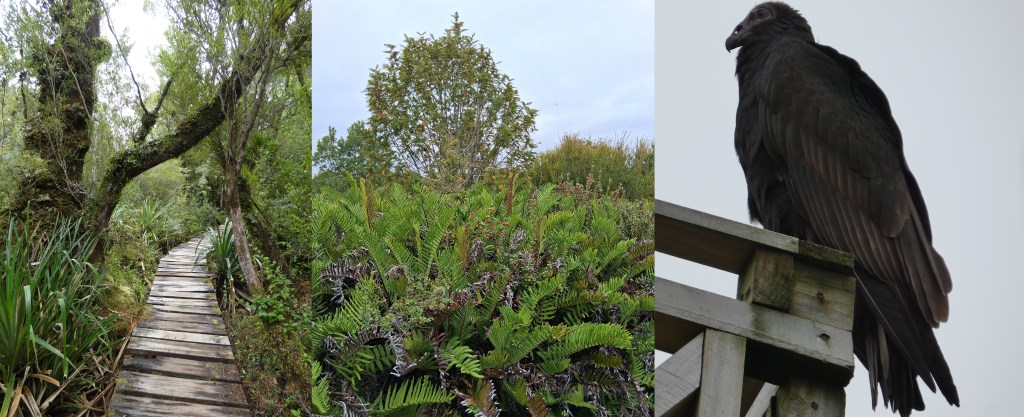
We then had a coach tour to Chiloe National Park. We walked over wooden boards in the forest, learning about the plants and trying various berries. I particularly liked the Murta berry. There was a young turkey vulture sitting on top of a viewing platform. It didn’t seem bothered by us.
There were plants with huge leaves known as Chilean rhubarb. Fuchsias were growing and were being pollinated by the Patagonian bumble bee which was big fluffy and orange. This species became endangered after the introduction of the European bee.
Some of the trees were growing in a dark part of the forest. The trees grow several stems which blocked out the light so nothing was growing underneath. They live like this for about a hundred years, then they fall and one or two of the horizontal trunks will twist together and grow shoots. They can then live another couple of hundred years.
We also saw a white-throated tree runner at the top of a tree – we have similar birds in the UK which we call tree creepers. We also saw some dark-bellied cinclodes.
Niebla
There were lots of whales, on our route to Niebla, including blue whales. I saw a couple before breakfast and heard their blows. There were also South American sea nettles in the water – these are large poisonous jellyfish. Northern royal albatrosses were flying around.
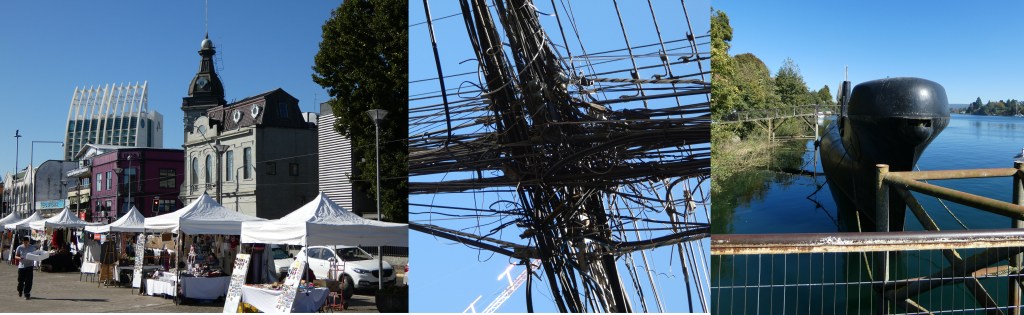
The ship stopped at Niebla and we had a coach ride to Valdivia. There we had a tour of the highlights of the city. We stopped at the main square and walked down to the river. As in many of the Chilean towns we visited the power cables were all overhead.
There was an old Oberon class submarine. It had been built in the UK and after decommissioning from the Chilean navy became a museum piece.
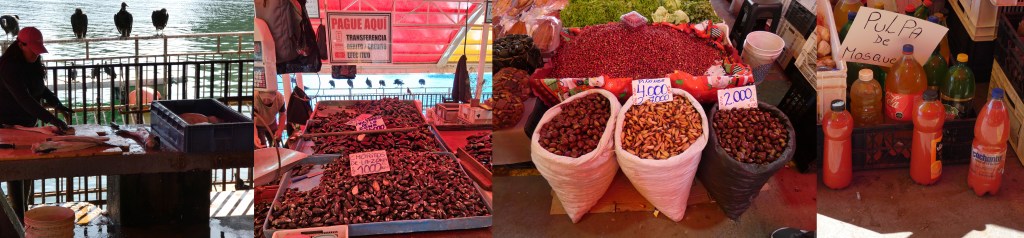
We walked to the fish market, but as it was afternoon most of the fish had been sold. The turkey vultures were sitting waiting for scraps. There was a stall with hundreds of mussels. Other stalls were selling fruit, including murta berries which we had tried earlier. Another stall had home made rose hip syrup – rosa mosqueta. It was being sold in random plastic bottles.
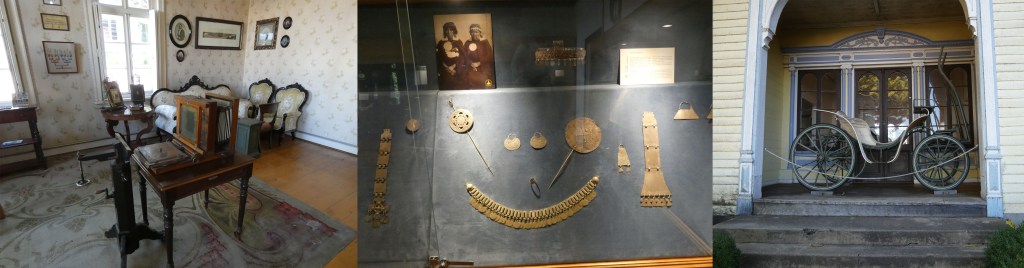
We went to the museum and saw several rooms dedicated to the Mapuche and showing a lot of their silverware. Other rooms were associated with Lord Cochrane who helped Chile in their wars of independence in the 1820s.
We came back to Niebla and tried to find our way to the fort. Only a ten-minute walk we were told. We walked for ten minutes then asked again. Only a ten-minute walk we were told. We walked again, but couldn’t find it so we came back to the quay and caught the last tender back to the ship.
At sea heading towards Valparaiso
It was a sunny day, there were big waves and it was windy but warm. I spent the day on deck wildlife watching. There were lots of whale blows in the distance. We saw both the norther royal albatross and Salvin’s albatross as well as petrels.
Valparaiso
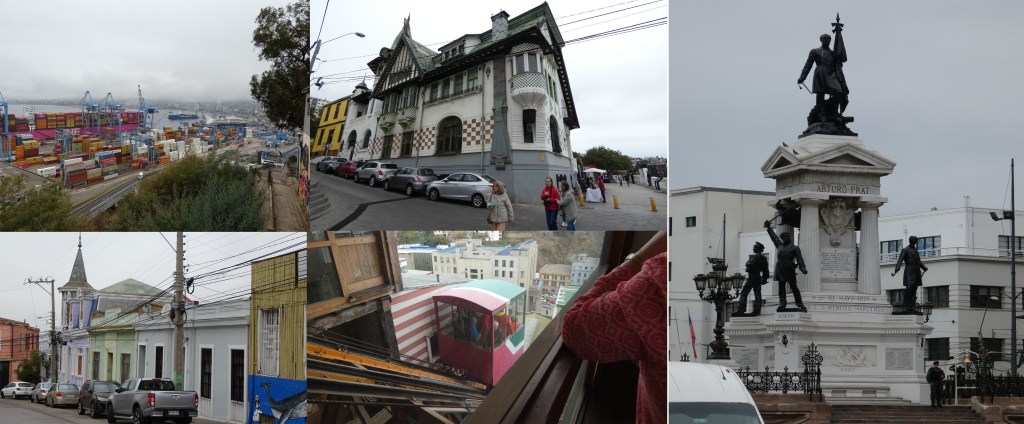
It was misty when we arrived in Valparaiso where we left the ship. Valparaiso is a thriving port. We had a coach tour round the city – getting off several times to look around. We also took a ride in the funicular railway.
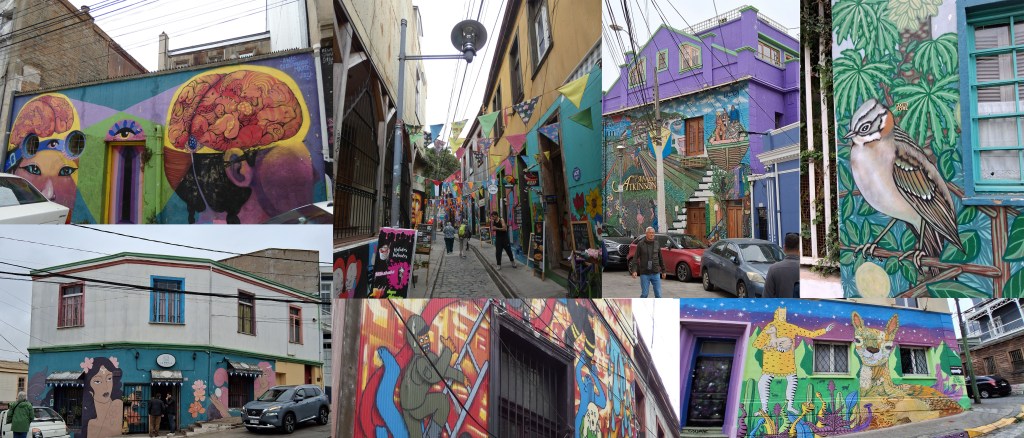
The street art was very impressive. It began in the 1960s/1970s.
Santiago
We drove to Santiago to stay overnight before leaving. Most people were returning home but I was off to Easter Island.