In April 26, after my trip along the coast of Chile I went to Rapa Nui. I was there for three nights but what an experience.
I took off from Santiago de Chile for the four and a half hour flight to Rapa Nui, in the Pacific Ocean. Rapa Nui, or Easter Island, is over 2000 miles from the coast of Chile, 1200 miles from the next inhabited land of Pitcairn, and about 2600 miles from Tahiti.
The runway at Rapa Nui is extra long – it was lengthened by the United States so that it could be used, if necessary, as a back-up landing place for the space shuttle. It was never used for that but it means that Rapa Nui can take large aircraft.
The airport itself is small, but there was a band playing and a dancer. People were handed leis (necklaces of flowers) as a welcome. We were met by our guide, a native of Rapa Nui, and taken to our hotel, the Nayara Hangaroa in the main town of Hanga Roa.
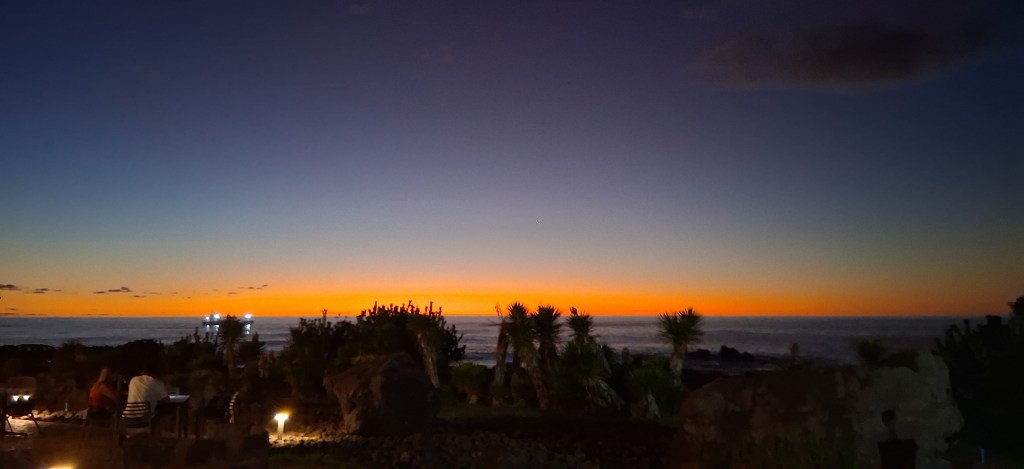
The hotel and its grounds are amazing. There are many cypress tree trunks as features. The lobby and lounge areas are designed to be an upturned canoe. My room overlooked the ocean and the sunset.
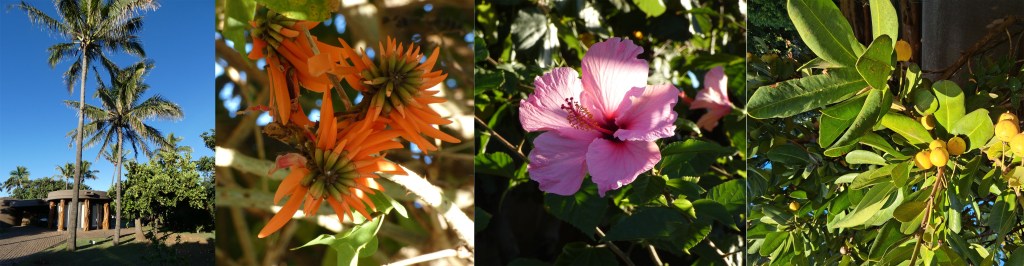
Outside were palm trees, Japanese apples and many shrubs with tropical flowers. Fresh flowers were used as decoration in the rooms. In the hotel ground chickens were wandering around. Chickens can be taken by any native if they are in need of food. The same goes for any fruits in the national park – they are there for the locals.
All around the island cattle and horses were roaming free. The horses are marked by their owners. There were usually two horses on the beach outside the hotel.
Our first excursion was to the quarry where all the moai were made. There are between three and four hundred of them in the quarry, in various stages of construction. All the moai were made here and then transported to the platforms scattered around the island. Each tribe had its own platform.
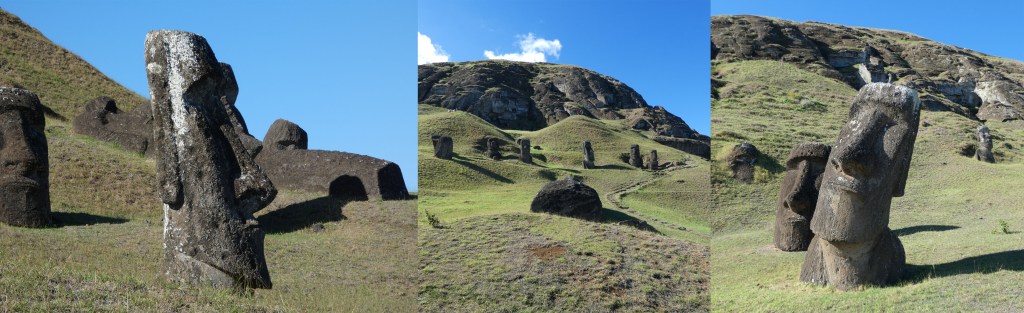
Around the island are moai that were being taken to their final spot only to be damaged during transport. They were left where they were. Only the perfect ones were used on the platforms. Most of the moai were toppled during civil wars on the island.
Most of the moai were males and standing upright. Long ears indicated chiefs or leaders or kings. One of the moai was kneeling, representing a priest talking to a king.
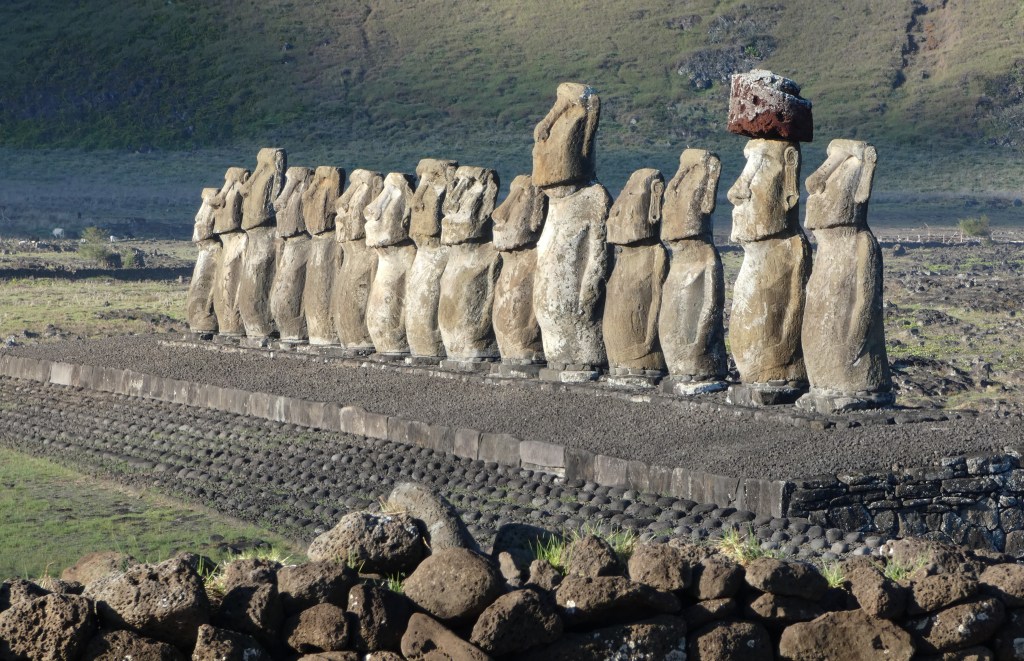
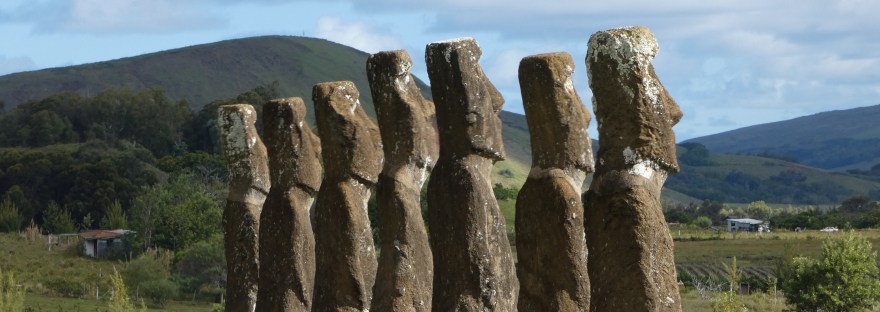
We visited Ahu Tongariki which has 15 moai standing on a platform. They were originally toppled and then moved by a tsunami in 1960. In the nineties, the Japanese helped re-stand the moai on the platform. All moai overlook the territory of the tribe.
We came here again on our last morning to watch the sunrise. There were several groups of people there waiting, but no one spoke – it was a magical moment.
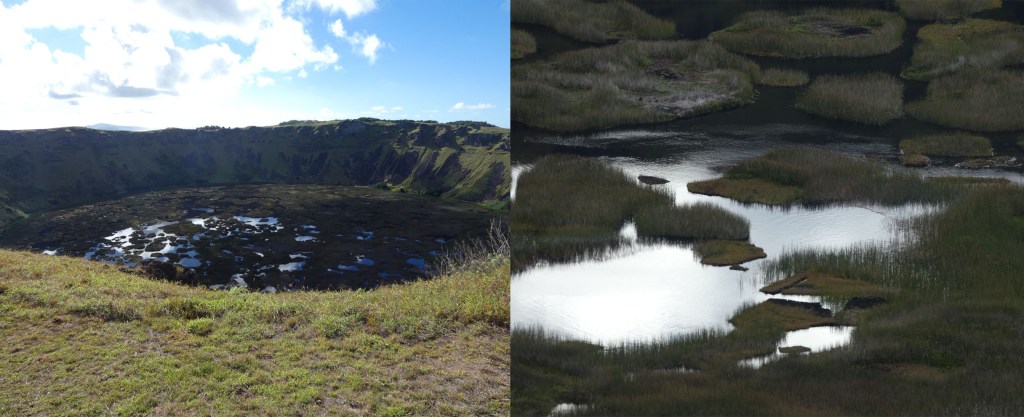
We had a tour to the volcanic crater where the island began. The crater was filled with fresh water that was covered in floating islands of plants. There was a path down to the water but we were not allowed down there. You can only go if you are invited by a local.
We learnt about the birdmen of Rapa Nui. Once a year each tribe would send warriors who had to climb down a cliff, swim out to the island, stay there until the eggs had been laid – maybe a day or two, then swim back with the egg. The first one back with an unbroken egg ensured that the elder of that tribe was king for a year. A lot of people died in the birdman competition.
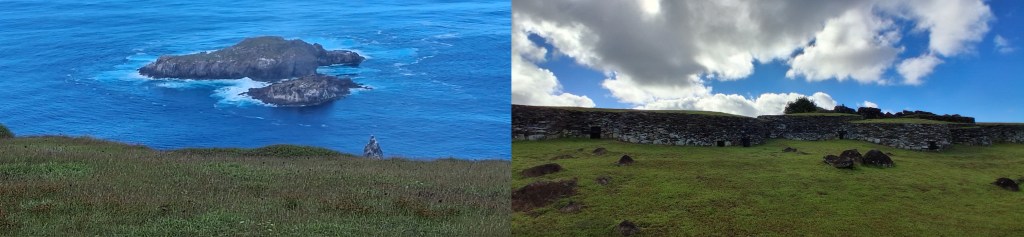
While the people on shore were waiting for the birdmen to return, they lived in houses with dry stone walls and a tunnel to get in. They were only used for sleeping.
We went to a platform that was constructed in a similar manner to Machu Picchu. One of the heads of a moai was lying on its back looking at the sky. Its red hat was nearby.
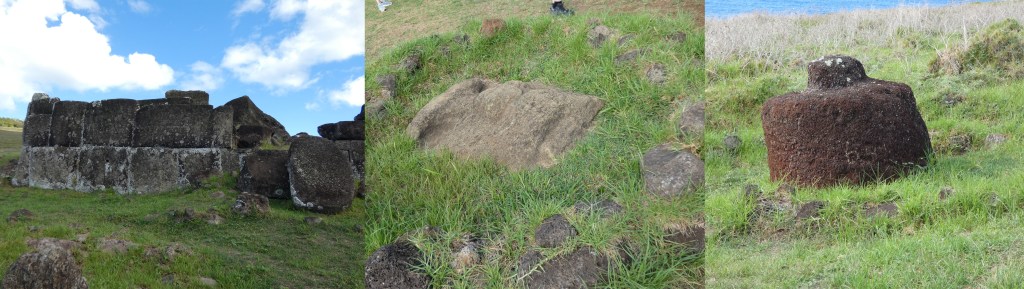
In the afternoon we went to a site where houses have been reconstructed with reed roofs. The elders would have slept in these. There was also a chicken coop made of rocks. Mostly the chicken run around, but in the times of hunger they were kept safe in the coop. This chicken coop had been reconstructed, but later on we saw some original ones.
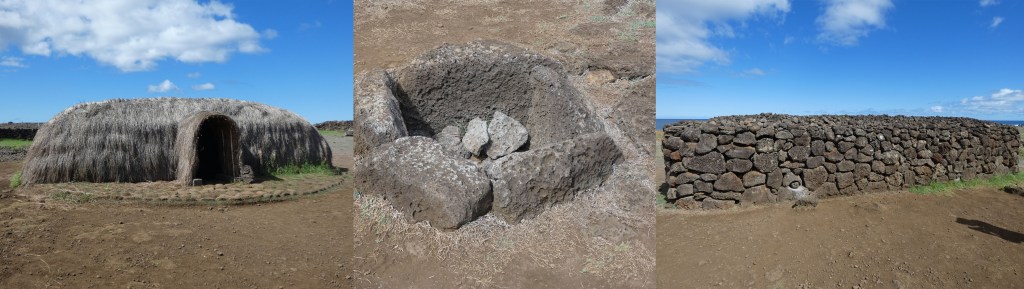
There was also an umu – a firepit. Rocks, with holes in them so they don’t explode, are heated in the pit by lighting a fire. When the rocks are glowing red you put palm leaves on them, then food, then rocks then more palm leaves. The food is left to cook for 3-5 hours or overnight. Then everyone gathers round to share the food.
At the hotel we were invited to an umu. Locals played small guitars – similar to Polynesia – and danced and sang while the food was dished up. We were given a banana leaf and on it chicken and sweet potato. Then, there was artistic dancing with storytelling.
We went to the site of seven moai on a platfrom – Ahu a Kivi. The moai were looking out to sea, but their tribe were fishermen. They are said to represent the first scouts who were sent to find the island. These moai were inland as there are caves by the sea shore and the moai could fall into them. The central moai lines up with the rising sun at the equinoxes.
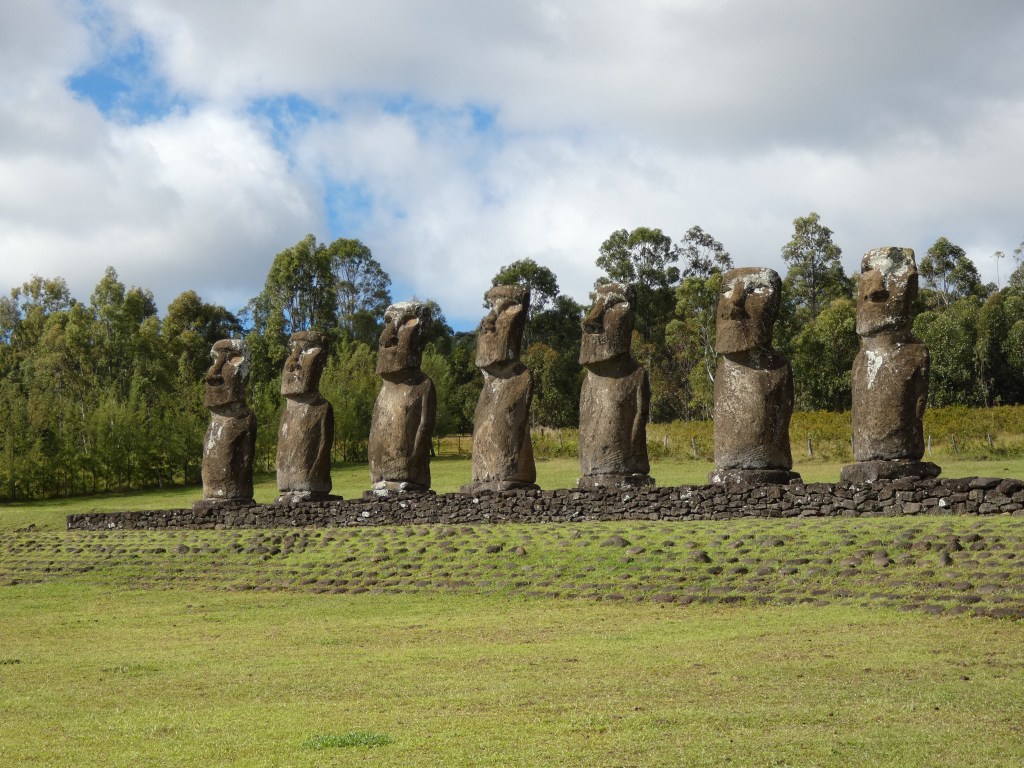
These moai had been restored by William Mulloy, an American archaeologist, as they had previously fallen.
The next morning we went to see some pteroglyphs of octopus, tuna, fish and Make Make – the creator god. These particular ones were made by a fishing tribe.

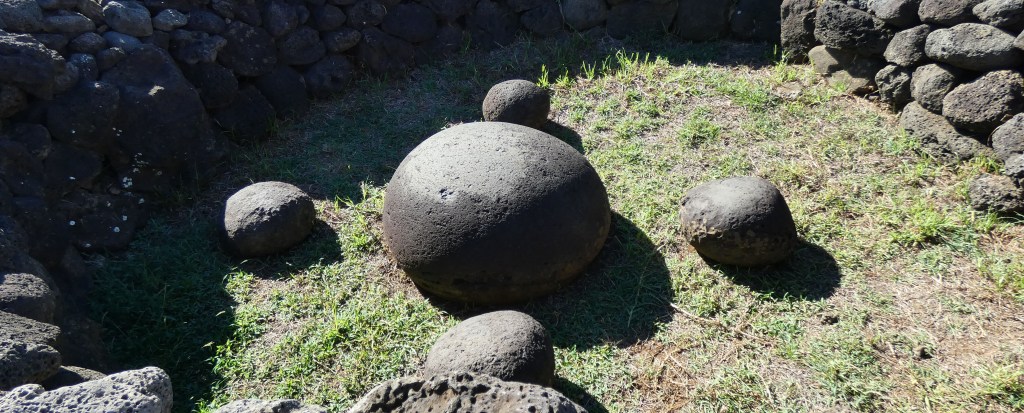
We saw several magnetic polished stones – a large one and four smaller ones round it. The largest is known as the navel of the world. It was thought to be a fertility rock and couple came to it in the hope of having children. All the rocks are now inside a rock wall to prevent people touching them.
In the rocks by the water our guide found some small shellfish which are used to make a soup. He also found an edible sea urchin which I held for a while. The tentacles were moving all the time.
Our next port of call was Anakena beach. This beach is made of fine white coral. The sea was clear and you could see fish swimming about. There were small waves – a perfect place for a swim in the South Pacific.
There were lots of palm trees growing beside the beach. They were a present from Tahiti. Near the beach was a platform with seven moai on it. Most had hats, signifying they were chiefs or leaders. There was also a space for another moai. This would have been a female – the sister of the king. It was found during excavations.
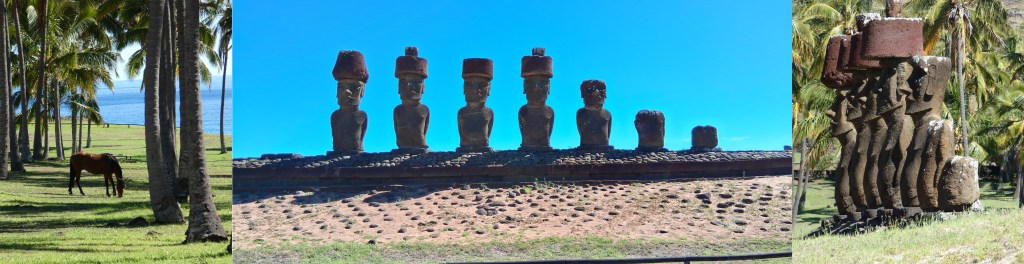
The hats are carved from a separate quarry to the bodies. This quarry has red rocks. We walked to the top of this quarry for a beautiful view of Hanga Roa. A lot of the houses in the countryside don’t have electricity. They are starting to use solar panels.
All standing moai have been replaced upright by various archaeologists over the years, including Thor Heyerdahl. They were all pushed over at one time because the people didn’t think they were protecting them any more.
The current Rapa Nui people are descended from 111 original islanders. Over the years they had been enslaved and taken away from the island. Rapa Nui was completely closed for three years during covid. The only contact to the rest of the world was through the regular plane deliveries. Even Rapa Nui people who were away at the time weren’t allowed to return
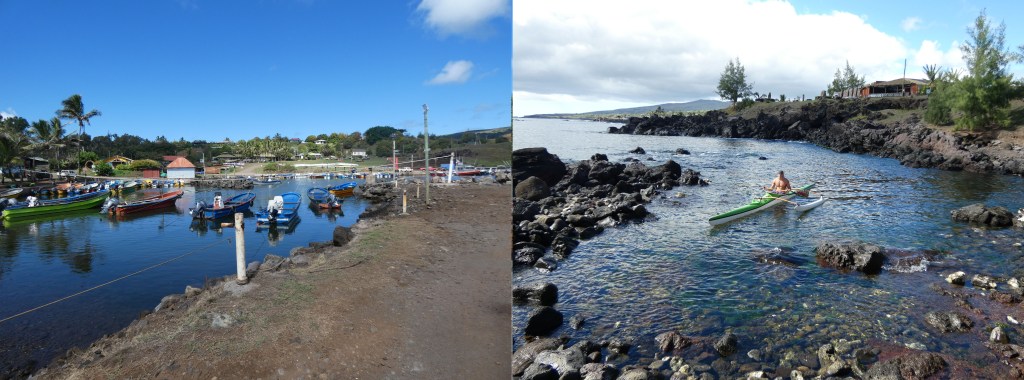
I walked into town for my last afternoon. There was a young man in his outrigger canoe arriving as I stood by a bay. He got out of the boat and put the boat on his shoulder as he came ashore.
This was an amazing trip, made all the more special by the local guide who told us all about the history of the island and his people.


What wonderful experience Anne. It will stay with you forever. Jean
LikeLike