nature, Travel

Galapagos adventure – Espanola

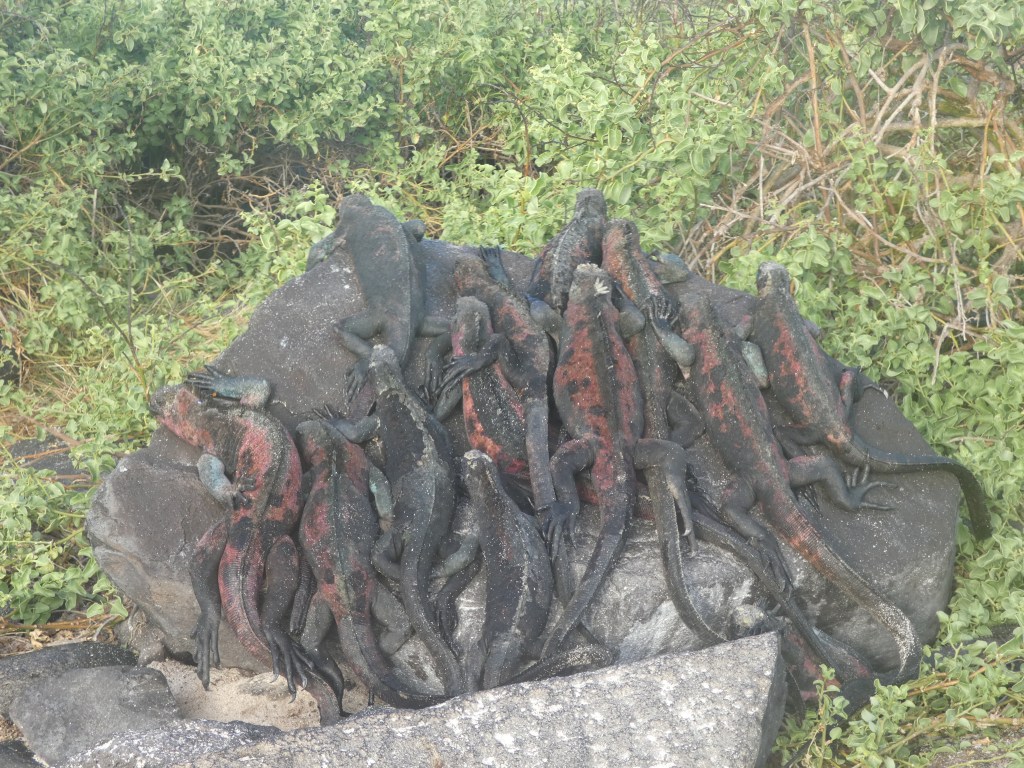
Our next island to visit was Espanola. It is an island with cliffs and boulders that we had to walk over. We saw the Galapagos hawk and marine iguanas – these were redder in colour than the ones on the other islands. There were about a dozen lying together on a rock.
There were the usual sea lions on the beach. There was a young sea lion that was only a few hours old. The placenta was still lying near the mother.
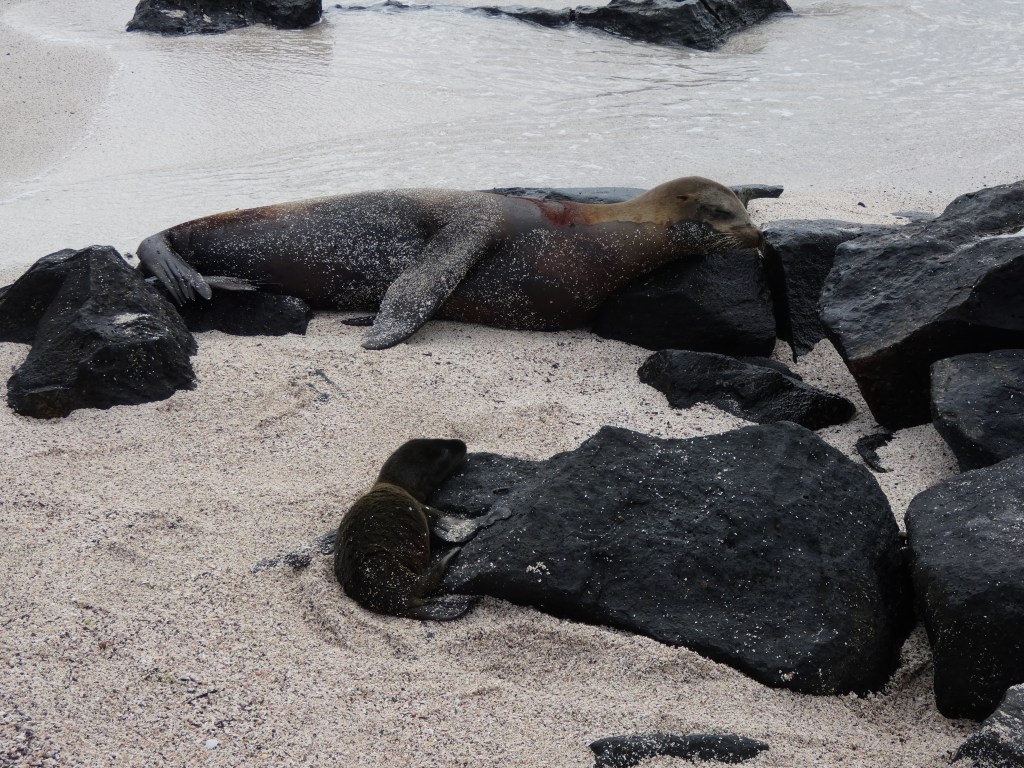
baby sea lion, only a few hours old with its mother

Another young seal lion was very curious about us.
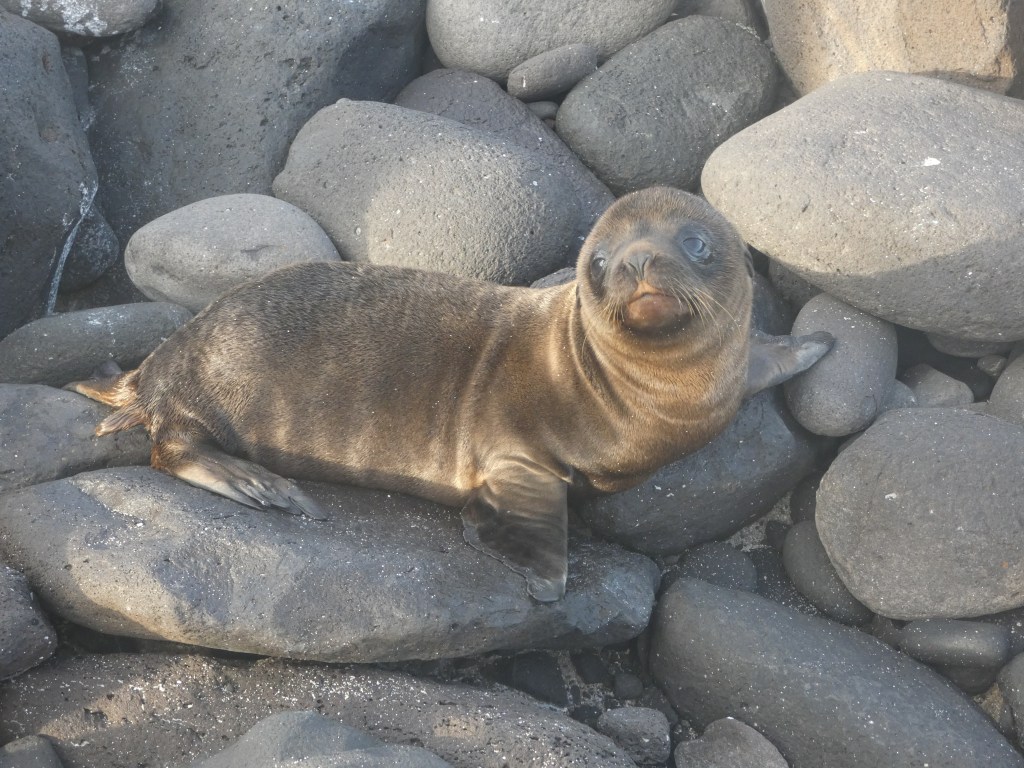
young sea lion

There were lots of mocking birds, and blue-footed boobies were on their nest. One pair of boobies had decided to have their nest on the footpath. We had to negotiate around them. They weren’t worried, just sat there and looked at us.

On this island was the Galapagos waved albatross. Espanola is the only island you will see them. They were paired up and preening each other.

There was a nest with a young albatross in it – it was half fluffy. It’s parents had gone to sea to find it food.
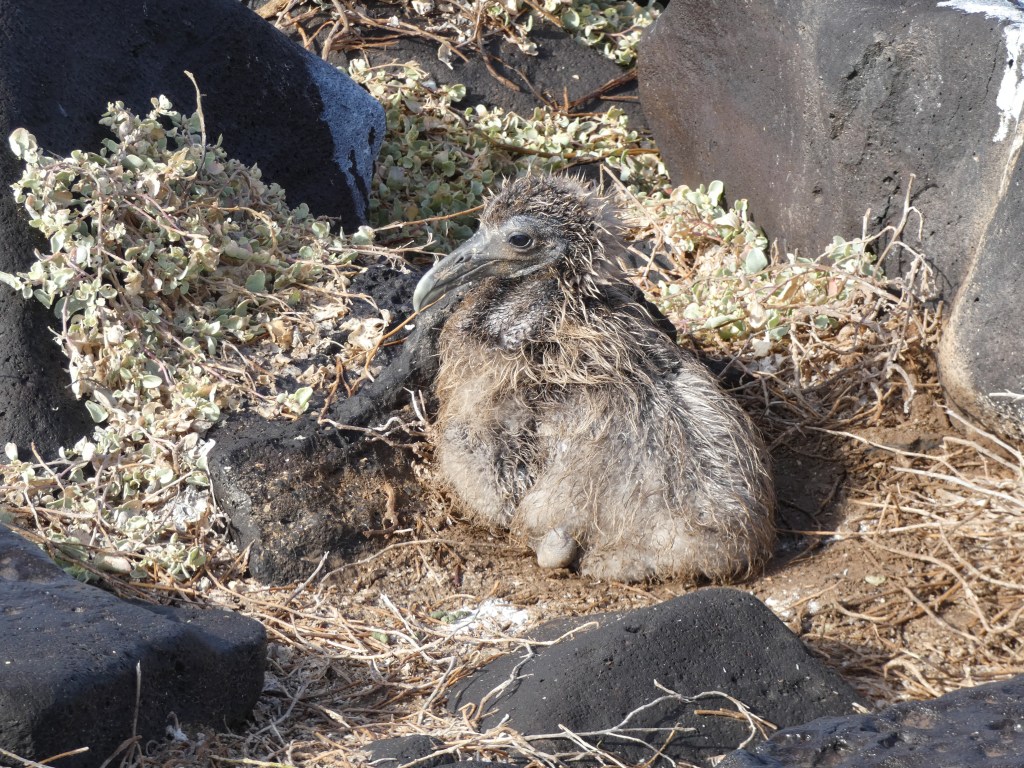
young waved albatross

As we walked along the cliff, we could see a blowhole caused by the waves rushing into a hole in the rocks and being forced out through a hole upwards. The water came up a long way and made a rainbow each time.

There were many frigate birds flying around and lots of Nasca boobies.

Time for kayaking – the first time I had been. It was enjoyable until my grandson decided to rock the kayak.

More deep-water snorkelling for my grandson where he saw white-tipped reef sharks. It is said the Galapagos is the only place where someone shouts shark and everyone jumps in the water to look!

We ended the day on the beach in Gardner Bay. It was a long stretch of pure white sand – plus the usual sea lions. I went for a swim. Sea lions came and joined us.

Previous: Galapagos adventure – Santa Cruz

Next: Galapagos adventure – Eden Islet and North Seymour

nature, Travel

Galapagos adventure – Santa Fe

The next day we went for a walk on Santa Fe Island. It is not a very high island but it was very hot. Santa Fe has many mature prickly cacti, some a hundred years old, as they don’t have many predators eating them – apart from a few iguanas.

There were many sea lions on the beach – we encountered them on all our landings.

We also saw the Galapagos hawk and several mocking birds.

We saw Santa Fe land iguanas, both male and female – the male being the larger. As they walked along, they clicked their heads.

They even walked between us as we stood there, and watched us as we watched them eating.

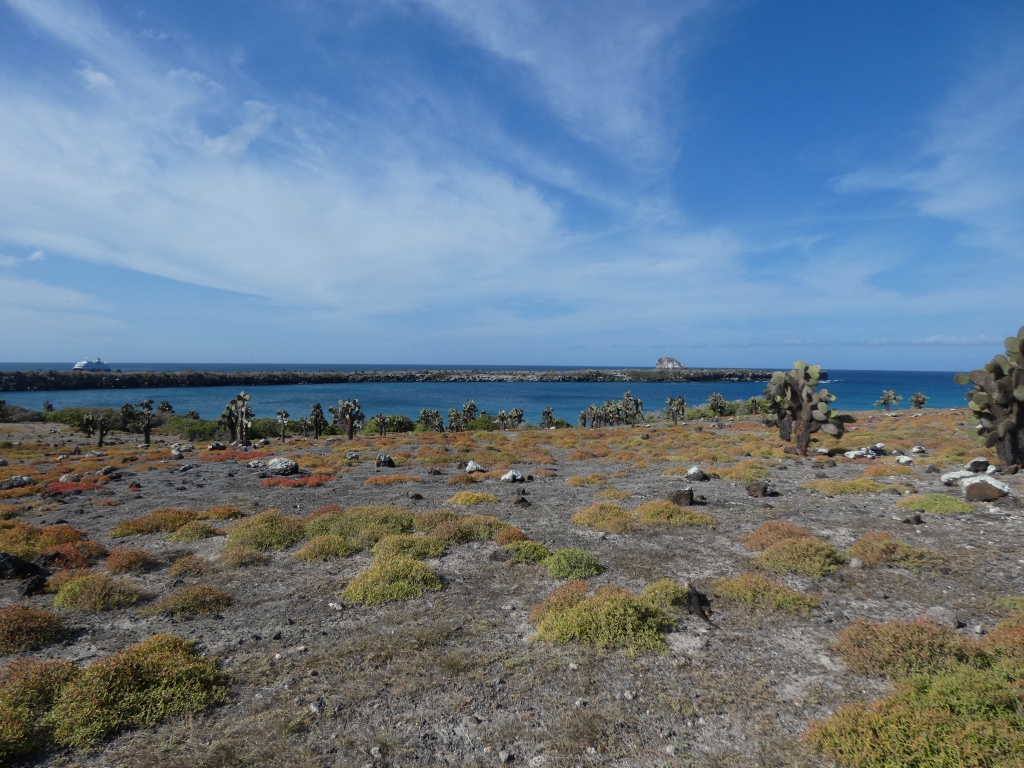
We did some more snorkelling at Santa Fe, then went for a walk round Santa Cruz Sur – this time it was a dry landing. Here were land iguanas and Nasca boobies.

Again the landscape was different.

santa cruz sur

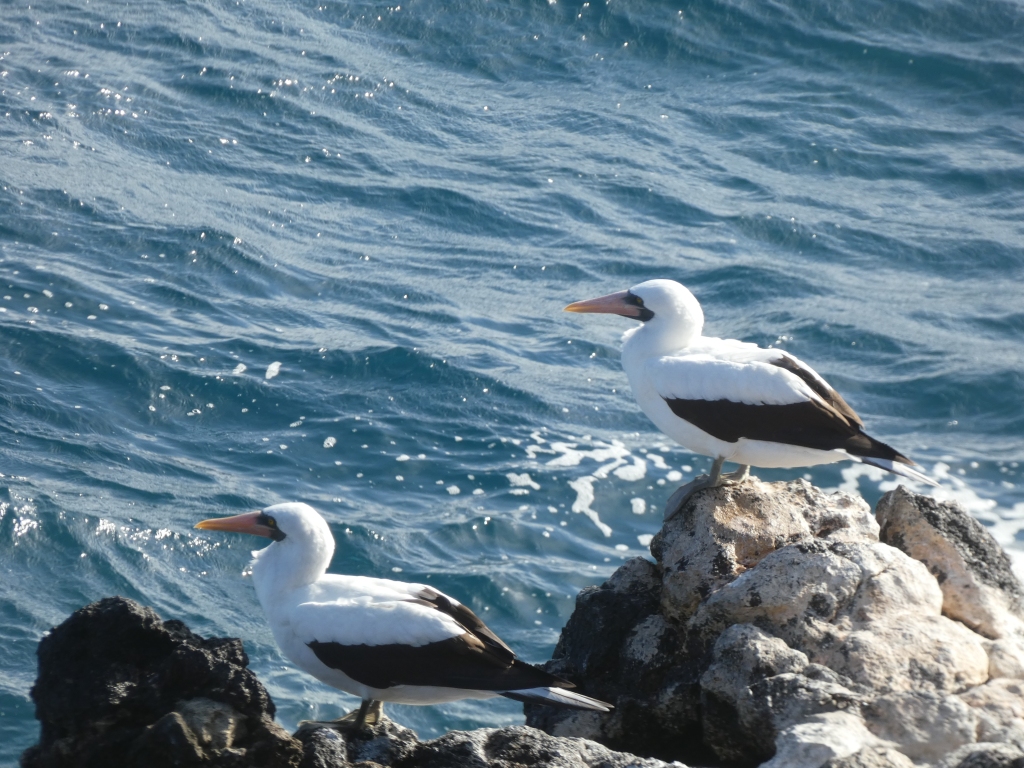
There were several Nazca boobies along the cliff.

nazca booby

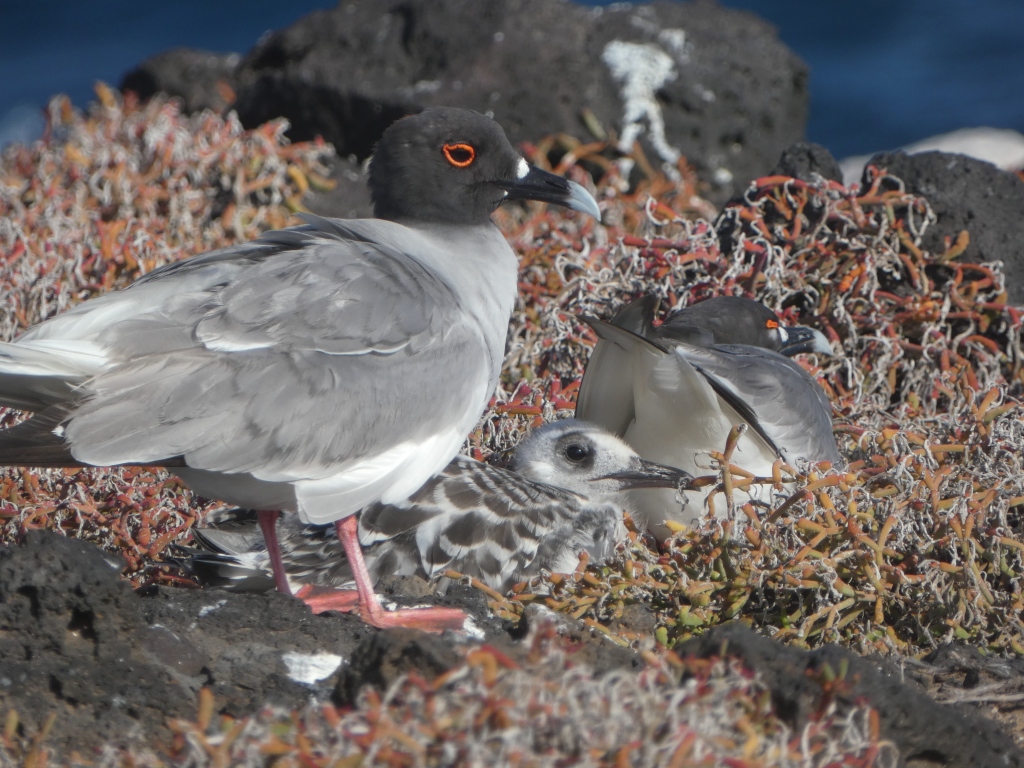
Swallow-tailed gulls had made their nest there are were rearing their young.

swallow-tailed gull

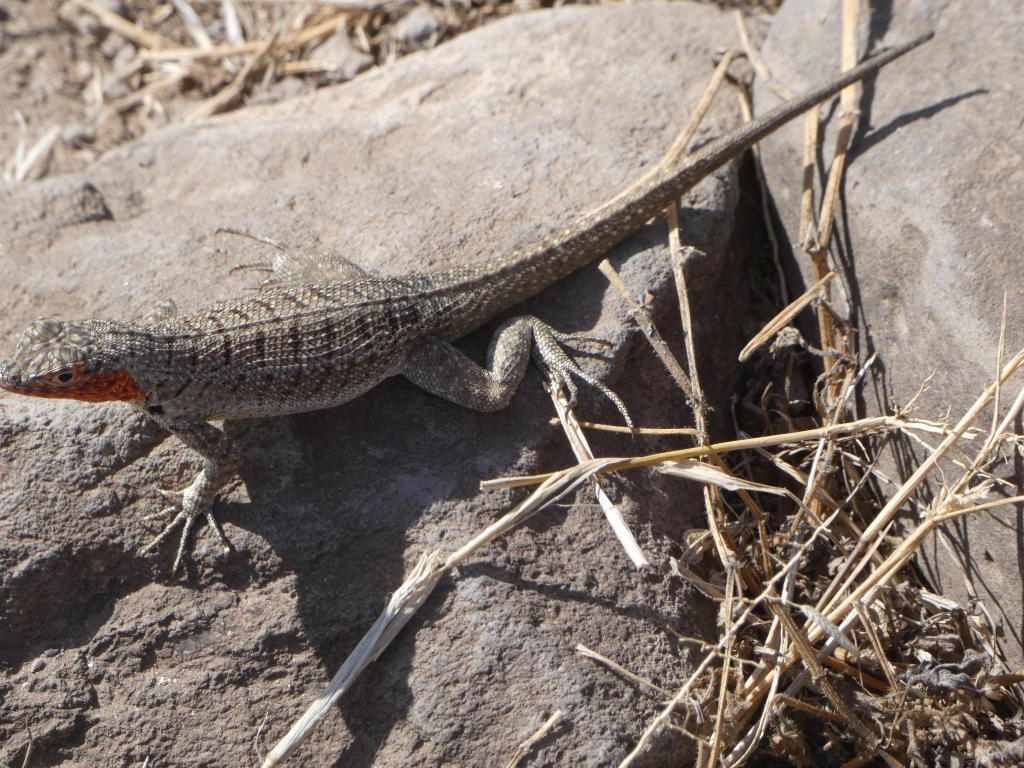
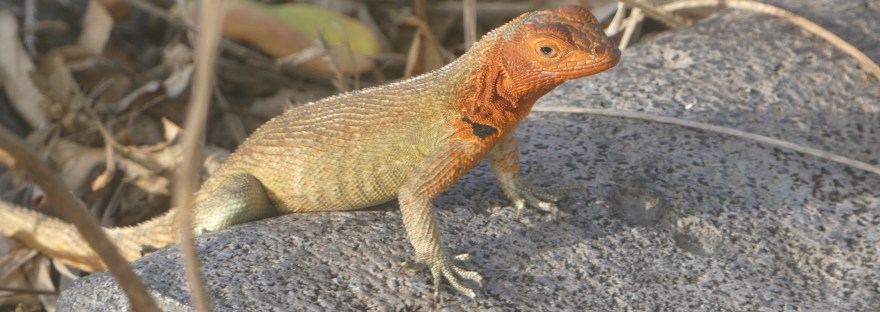
There were lava lizards and land iguanas here as well.

lava lizard

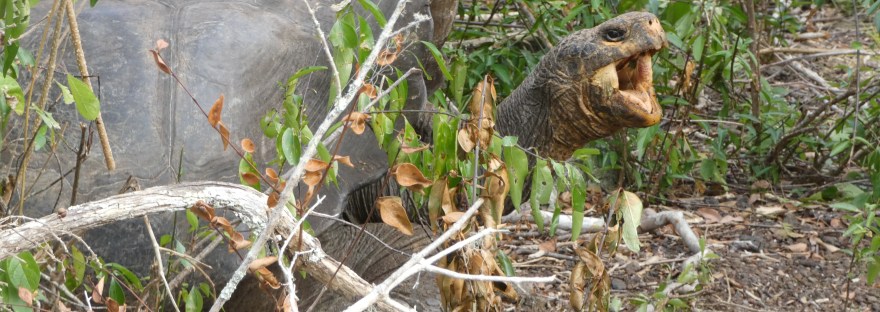
We saw a land iguana standing on its hind legs to reach and eat a prickly pear cactus.

Previous: Galapagos adventure – San Cristobel

Next: Galapagos adventure – Santa Cruz
nature, Travel

Galapagos adventure – Mosquera Islet

What an experience! I have just returned from a visit to the Galapagos islands and would say to everyone – do go and see the marvellous wildlife.

I spent six days on board MS Santa Cruz II, a Hurtigruten expedition. There were only fourteen guests, so we had an exceptional time.

Baltra airport, Galapagos

We landed at Baltra airport. We had to hand over our Transit Control Card (TCC) – cost $20. Our carry-on luggage was x-rayed and checked that we were not bringing any fruit or seeds into the Galapagos. One-use plastics are also banned there. We also had to pay the Galapagos National Park entrance fee of $100. Our hold luggage was subject to a K9 inspection – a dog sniffed it all to check for contraband.

Then we left the airport to get on our coach. Outside were cactus and tropical plants and in among them our first encounter with iguanas. Two were just sitting there basking in the heat and a third was wandering around.

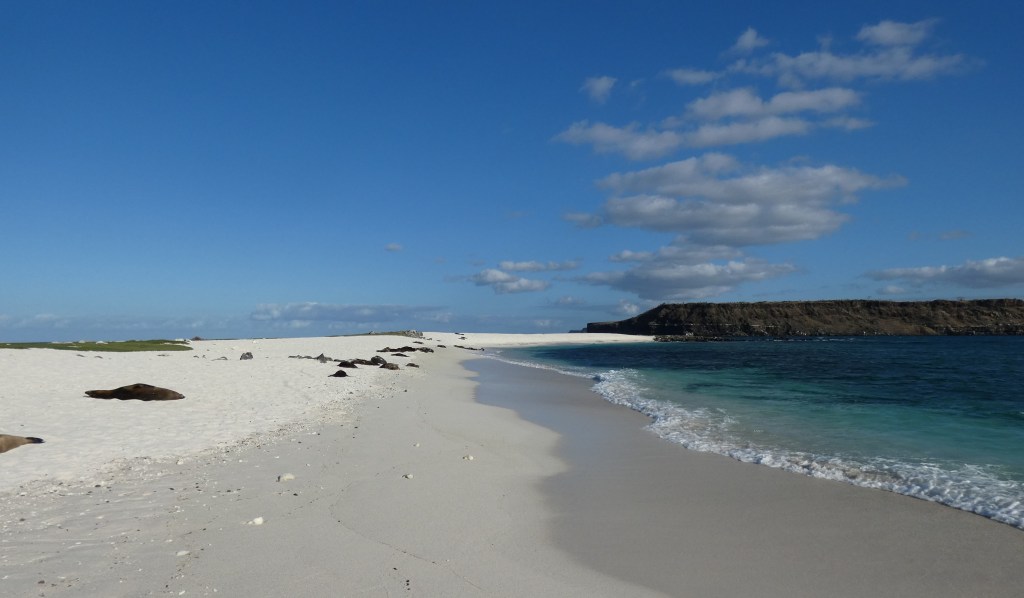
A ten-minute bus ride and we boarded a panga to go out to our ship. No sooner had we arrived at our ship and had our safety briefing, then we left for our first landing, on Mosquera Islet. Ahead of us was a long white beach. We went by panga and had a wet landing where we paddled to get on shore.

Beach on Mosquera Islet

All visitors to Galapagos must be accompanied by a certified naturalist guide, and our one was so knowledgeable and answered all our questions.

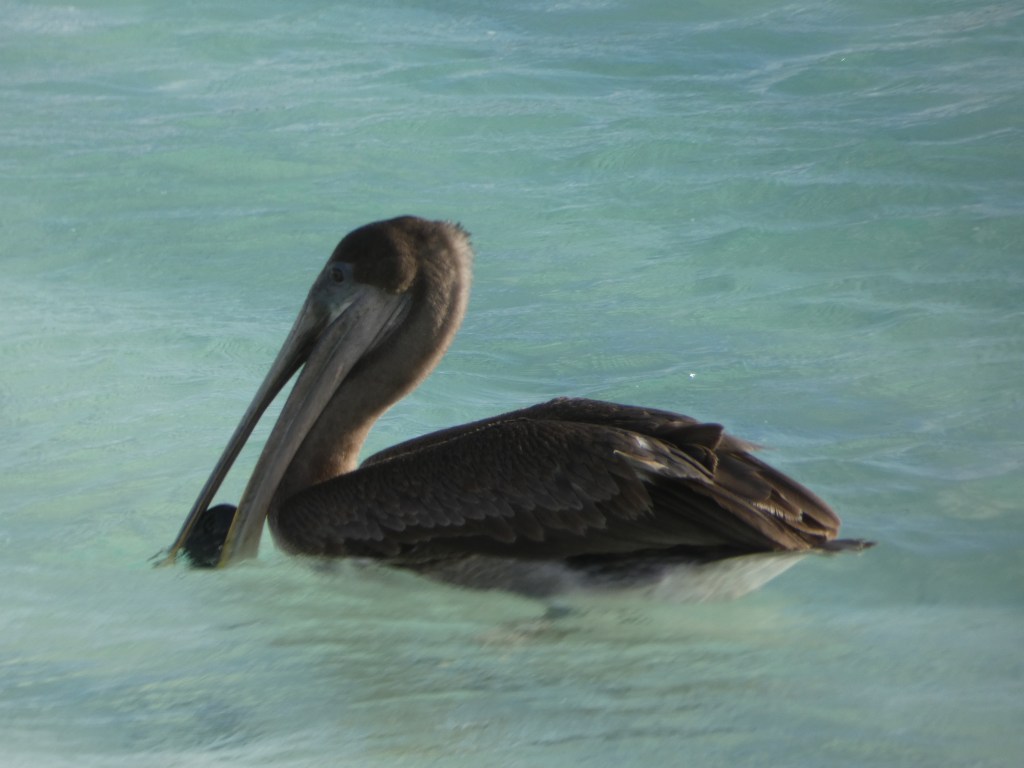
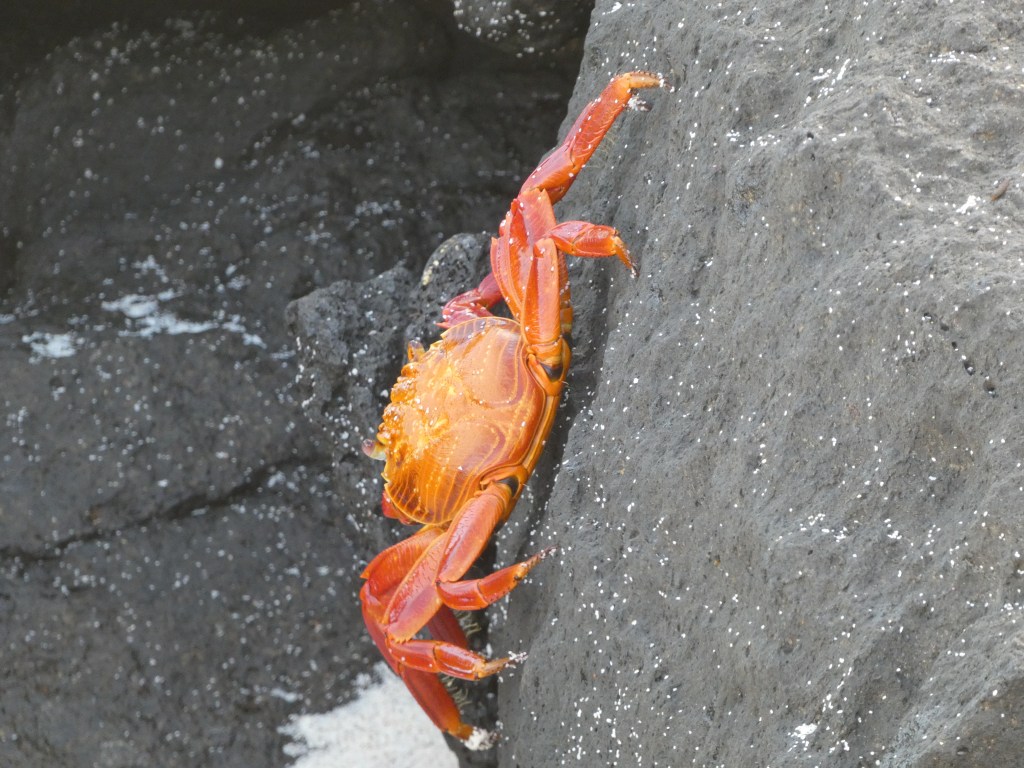
On the beach were sea lions, having a nap or just lying there ignoring us. There was a pelican by the edge of the shore fishing, sally light-foot crabs on the rocks, lava lizards hot-footing it on the sand, and a marine iguana lying on a log.

Sea lion
Pelican fishing
Sally light-foot crab

None of the animals and birds were concerned about us, they didn’t run away as we got close. We had to stay two metres away from them but sometimes they would approach us.

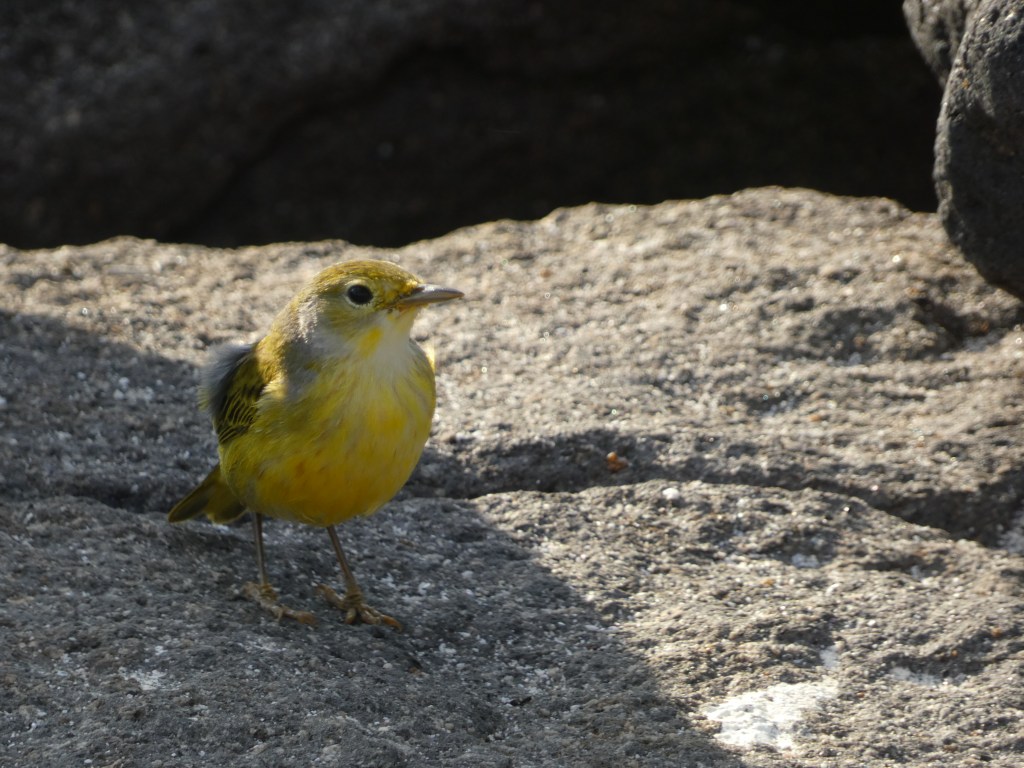
As well as the pelican we saw frigate birds and the red-billed tropic bird – a beautiful white bird with a long, long tail. Later on, we spotted a yellow warbler on the sand near to a whale skeleton.

yellow warbler

A wonderful start to our Galapagos adventure.

Next: Galapagos adventure – San Cristobel